Low Blood Sugar 101: Tips for the Newly Diagnosed
Written by: Ginger Vieira
6 minute read
March 1, 2026
If you’ve ever heard your doctor talk about hypoglycemia, that’s a fancy clinical name for low blood sugar. Low blood sugar is one of the most stressful parts of living with diabetes. People with type 1 and type 2 diabetes experience it.
If you live with diabetes and are taking any blood-sugar-lowering medication, it’s important to be aware of the signs, how to treat it, when to ask for help and how to be proactive about your blood sugar levels.
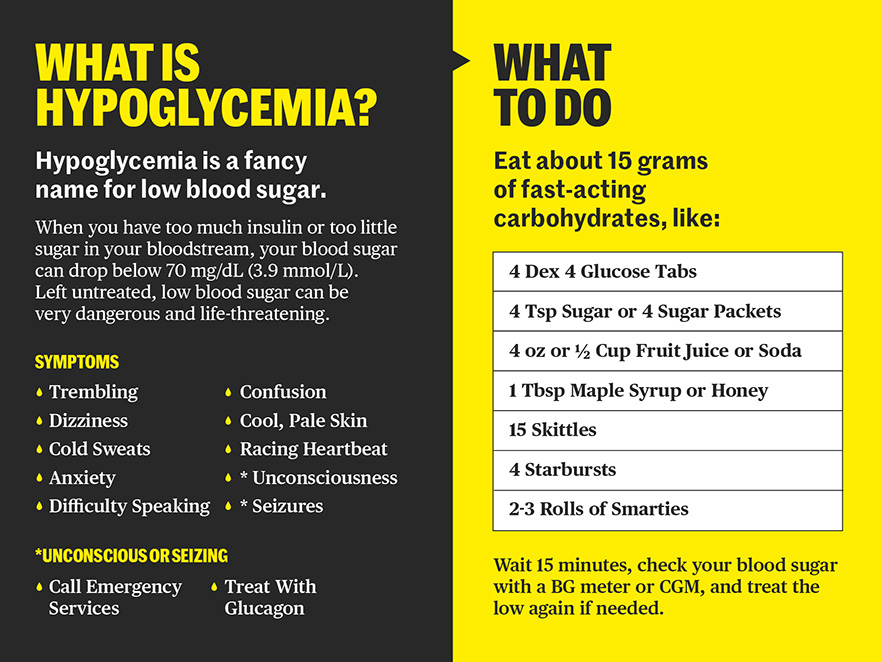
Low blood sugar warning signs
Low blood sugar happens when there is too much insulin or too little sugar in your body. Technically, it is any blood sugar level at or below 70 mg/dL (3.9 mmol/L). Severe low blood sugar levels begin when your blood sugar drops below 55 mg/dL (3.1 mmol/L).
Common low blood sugar symptoms include:
- Blurred vision
- Cold sweats
- Confusion
- Cool, pale skin
- Difficulty concentrating
- Drowsiness
- Excessive hunger
- Feeling anxious
- Fast heartbeat
- Headache
- Nausea
- Nervousness
- Nightmares
- Restless sleep
- Shakiness
- Slurred speech
- Sudden changes in behavior—either aggressive or goofy (in adults, they might seem drunk without drinking)
- Unusual tiredness or weakness
Severe low blood sugar can cause seizures or loss of consciousness. Sometimes, severe blood sugar can even be life-threatening. Luckily, there are many things you can do beforehand to prevent this from happening. And no, that doesn’t include letting your blood sugars run high—that can lead to other dangerous complications.
The goal is to find stability in your blood sugar levels—that includes being proactive about lows!
What causes low blood sugar?
Many different situations can trigger low blood sugar in people with diabetes.
You may be at an increased risk for low blood sugar if you:
- Exercise with too much insulin on board (IOB), which refers to the amount of insulin left in your body from a past insulin dose
- Have too much IOB, period
- Stack your insulin, which refers to a buildup of rapid-acting insulin doses in your body that were given close together
- Skip meals
- Don’t eat enough food with the insulin you have on board
- Adjust your exercise routine without adjusting your insulin dose
- Rage-bolus, which refers to rapid-acting insulin doses given closely together to correct a stubborn high
- Exercise excessively
- Drink alcohol on an empty stomach
Just because you’re at increased risk for low blood sugar during these activities doesn’t mean you have to avoid them. It just means you may need to take a few extra steps in your diabetes management to make sure you don’t go low.
You have to live your life! It’s not about avoidance in life with diabetes—it’s about figuring out how to enjoy these activities while managing a challenging disease.
Low blood sugar awareness means you can be proactive, whether that means having a snack before exercise, being more patient with your insulin dosing strategy or working with an accountability partner who can coach or cheer you through it. Always ask your healthcare provider for help and advice when lows feel unrelenting! That’s what they’re there for.
CGMs can help you get proactive about low blood sugar
Continuous glucose monitors (CGMs) are helpful tools for many people with diabetes. They help you see patterns in your blood sugar levels, show how your diabetes decisions affect them and send real-time alerts.
CGMs can also show whether your blood sugar is dropping quickly or help you understand how different activities impact your levels.
Everyone is different. Some people might see their blood sugar spike after certain exercises, while others might see it drop. There are general tips to help manage diabetes, but since everyone’s body is different, your blood sugar plan should be personalized.
That includes how you tackle lows—use data as a starting point for a productive conversation with your healthcare team about managing low blood sugar.
How to treat your low blood sugar
Managing your low blood sugar depends on how serious it is and whether you can treat it yourself or need help. Usually, if you’re awake, you should eat 15 grams of quick-acting carbs. Wait 15 minutes. If your blood sugar hasn’t gone up, do it again. It can be hard to wait, but be patient because treating lows too often can make your blood sugar too high.
If your blood sugar is dangerously low and you can’t treat it yourself, someone else might need to give you emergency glucagon. Make sure the people you trust and see often know how to use it. Practice giving it to them so they are ready. Hopefully, they will never have to use it, but it’s good to know how, just in case.
If you see someone with severely low blood sugar and they are not awake to treat themselves, give them emergency glucagon and call 911 immediately.
Low blood sugar treatment options
Common ways people with diabetes treat hypoglycemia include:
- Glucose tablets: 4 tablets usually equal 15g of carbs.
- Glucose gel: Usually, 1 tube.
- Glucose powder: Usually, 1 packet.
- Glucose gummies: Usually, 4 gummies equal 15g of carbs.
- Regular soda: 4 ounces or a half cup.
- Juice: 4 ounces or a half cup.
- Granulated sugar: 4 teaspoons.
Always check the nutrition label on the back of your low blood sugar treatment to be sure, as carbohydrate grams vary among products.
Lows are scary, but you can handle them
Low blood sugar is an unavoidable part of living with diabetes. Even excellent self-managers experience it because they’re human. That’s normal! But chronic low blood sugar isn’t.
If you’re experiencing frequent lows you can’t get a grip on, it’s time to talk with your healthcare team about possibly adjusting your medication dose or insulin-to-carb ratio, or finding a new diabetes management strategy.
The middle ground in life with diabetes can feel hard to find, but when you look up, you’ll often find there’s more gray than black and white—aka the nasty extremes of highs and lows.
For every low, just remember that there’s a unicorn reading around the corner. It just takes patience, practice, time and support.
Are you newly diagnosed or supporting someone who is? Our Beginner’s Guide to Thriving With Diabetes, is a great place to start.



Author
Ginger Vieira
Ginger Vieira is the senior content manager at Beyond Type 1. She is also an author and writer living with type 1 diabetes, celiac disease, fibromyalgia and hypothyroidism. She’s authored a variety of books, including “When I Go Low” (for kids), “Pregnancy with Type 1 Diabetes,” and “Dealing with Diabetes Burnout.” Before joining Beyond Type 1, Ginger spent the last 15 years writing for Diabetes Mine, Healthline, T1D Exchange, Diabetes Strong and more! In her free time, she is jumping rope, scootering with her daughters, or walking with her handsome fella and their dog.
Related Resources

If you live with diabetes and take insulin you've probably experienced low blood sugar. Low...
Read more

In a perfect world, you would be able to enjoy your favorite outdoor activities without...
Read more

Exercise can be challenging if you live with diabetes and take insulin or use other...
Read more