Needle Phobia + Insulin: How To Get Past The Fear
Written by: Ginger Vieira
9 minute read
November 6, 2026
Medically reviewed by: Beyond Type 1 Clinical Team
Needle phobia (fear) is not uncommon. It’s a commonly listed fear in popular BuzzFeed listicles, TikToks and Instagram reels. Still, that doesn’t mean it should be normalized, especially if you live with a condition like insulin-dependent diabetes, which affects all people with type 1 diabetes (T1D) and some people with type 2 diabetes (T2D) and requires you to overcome it to survive.
But it’s not so much about “getting over it” as it is about understanding the root of this fear and how to manage symptoms. It may be something you have to work through throughout your life, and when you need insulin simply to live, you have to put in the effort.
How needle phobia (fear) develops
Needle phobia (fear) is real, and it’s usually rooted in something specific.
“We know that negative experiences or previous trauma can be causes of needle phobia,” says Laura Hieronymus, DNP, MSEd, RN, MLDE, BC-ADM, CDCES, FADCES.
According to Cleveland Clinic, Psych Central and this study, traumas that may lead to needle phobia include:
- Direct trauma: a painful or frightening experience from the past that directly involved you and a needle.
- Witnessed trauma: a painful or frightening experience from the past involving someone else with a needle.
- Conditioning: repeated painful procedures can train the brain to expect pain and react with fear.
- Vasovagal response: a physical reaction, like a blood pressure drop or fainting, separate from psychological trauma.
- Genetics/family history: needle phobia tends to run in families.
- Existing anxiety: having an anxiety disorder or another phobia can make you more likely to develop needle fear too.
- No single cause: it’s usually a mix of factors, and it varies from person to person.
While these are very real, they are still not an excuse to skip insulin if you need it. You can still give yourself grace while staying accountable to all of your body’s needs, including insulin.
You can’t skip insulin if you need it
If insulin is part of your treatment plan, understanding why you have to inject it instead of swallowing it can make it easier to accept for some.
Insulin is a small protein and peptide hormone. If you swallow it, your digestive system will break it down before it ever reaches your bloodstream. That’s why it has to be delivered another way. Injecting it just under your skin lets your body absorb it where it actually needs it.
The truth about insulin injections and needle sizes
Here’s the part that surprises most people. Insulin goes into the subcutaneous layer, the fatty tissue just under your skin. That layer has very few nerve endings, so there’s little to no pain involved. Modern insulin needles are also shorter than most people imagine.
Films can make us think needles are always long and sharp. And in a horror movie, that’s called for, but in day-to-day-life, it’s the furthest from reality!
Today, medical needles typically range from 4 to 12.7 mm. For diabetes management, 4- to 8-mm needles are recommended regardless of body mass index (BMI). Experts say there is no medical reason to use a needle greater than 8mm for insulin injections. This is because the insulin only needs to reach the fatty tissue underneath your skin, as described above.
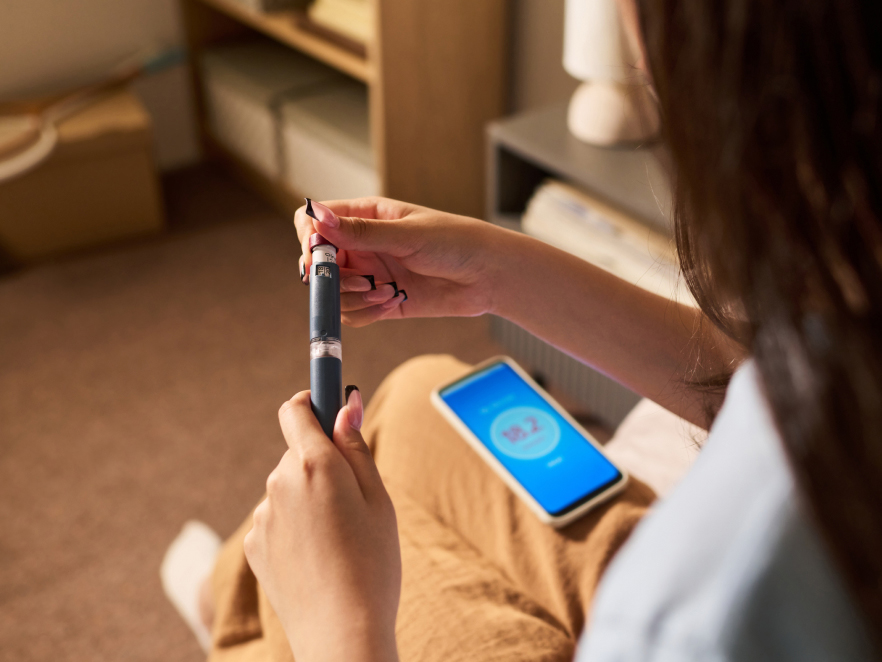
Insulin injections may be delivered through:
- Smartpens with insulin cartridges
- Traditional pens with insulin cartridges
- Traditional multiple daily injections (MDI) and insulin vials
Insulin pumps, pods and patches greatly reduce the need for needles
If your fears are more about the sensation or sound of injections rather than the size, knowing other options exist can help. Some insulin delivery methods only require a site change every few days rather than several injections per day.
If so, you can explore:
- Tubed insulin pumps: these are small, battery-powered devices about the size of a deck of cards. Some pumps connect to narrow tubing inserted with a small needle, but once the catheter sits under your skin, that needle comes right back out. Only the catheter stays in place, quietly infusing insulin in the background.
- Tubeless (pod) insulin pumps and insulin patches: tubeless pumps (Omnipod) and patches (CeQur) take this further. The needle inserts the catheter, then retracts back into the device. It’s there for a moment, but you never actually see it.
- Inhaled insulin: this is an ultra-rapid-acting insulin used at mealtimes, absorbed through your lungs instead of injected. But it can’t cover your background, or basal, insulin needs. Most people with T1D, and a fair number of people with T2D, still need at least one basal insulin injection per day when not on insulin pump therapy, but inhaled insulin can cut down how often you reach for a syringe.
“I have a friend with T2D who kept skipping his insulin injections because he was scared of needles, and his blood sugar climbed as a result,” Dr. Hieronymus says. “Switching to a tubeless pump changed that. He never had to look at a needle again, and that alone helped him stick with his insulin.”
Simple tricks to try that may help:
- Breathe out slowly as you inject.
- Distract yourself by counting, watch a video, or talk to someone.
- If you tend to faint, try “applied tension”: tighten your arm and leg muscles for a few seconds, relax and repeat. This keeps blood pressure up and can prevent fainting.
- Inject at room temperature because cold can sting more.
- Practice with a trusted person nearby until it feels routine.
Sometimes, it’s more than needle phobia and diabetes
For some people, the fear isn’t really about the needle at all. It’s about something else that’s making needle anxiety worse.
It’s anxiety, ADHD, sensory processing challenges or obsessive-compulsive disorder (OCD) manifesting around your daily medical routine. Diabetes can be where this surfaces; it gives many of these disorders a lot of fuel to work with, which can make them feel more dramatic and heightened.
That’s worth pausing to reflect on, because when someone tells you to “just push through it,” it doesn’t work the same way when a mental health condition is driving the resistance. It’s never that easy, just like managing diabetes is never that easy! It’s layered with complexity, including the points mentioned throughout this guide. If it were as easy as spinning a fidget toy, there wouldn’t be a need for resources like this. One could only dream!
What you can do:
- Ask your HCP or pharmacist to switch you to a 4mm or 6mm pen needle if you are using a longer one.
- Use a new needle each time because reused needles get dull and hurt more.
- Try injecting into a relaxed area like the belly area, and let an alcohol swab dry fully before the shot to avoid stinging.
Mental health conditions can intensify needle fears:
- Anxiety: can turn a three-second insulin injection into a spiral of dread hours before you even have to pre-bolus.
- ADHD: can make your diabetes routine itself the hard part—remembering, starting and sticking with it (not the needle).
- Sensory sensitivities: can make the alcohol swab, click of the pen or feel of the injection site matter more than the fear does.
- OCD: can turn insulin dosing into a loop of checking and rechecking that has nothing to do with phobia at all.
But here’s the thing—all of these mental health conditions can still make your needle fears worse, sometimes without you even realizing it.
When mental health conditions impact your ability to manage diabetes safely
None of this means something is “wrong” with you. Diagnoses like this are information you can use to address the root of your health challenges, just like your diabetes diagnosis was information about how you needed to compensate for your lazy pancreas!
Remember: The needle fear conversation and the mental health conversation are two different things that happen to overlap, just like the mental health conditions and your diabetes. They’re not the same! And your identity is more than any of them separately or combined.
Talk to your healthcare provider (HCP) if any of this sounds familiar, and don’t be afraid to loop in a therapist or psychiatrist who understands diabetes care. Your primary care provider (PCP) or endocrinologist—whoever you see regularly to help manage your diabetes—may be able to give you a referral if they agree you may be dealing with something beyond diabetes that’s making it harder to manage.
Managing anxiety, ADHD, sensory challenges or OCD directly, with therapy, medication or both, often does more for your diabetes care than any needle trick ever will. Who knows—it may even start to relieve some thoughts you have around it when you look into mental health diagnoses, medication and support!
Speak up about your needle phobia so you can work through it
If needle fear is keeping you from taking insulin the way you need to, say so. It’s nothing to be ashamed of and affects many people. Needles are a common fear! The scientific word for this phenomenon is trypanophobia.
Your HCP can’t help with something they don’t know about, so you have to talk to them. Certified diabetes care and education specialists (CDCESs) are trained to ask how you feel about your treatment. A good provider won’t use insulin as a threat or a last resort. They’ll work with you to find a way to take it that actually fits your life.
Not sure how to bring it up? Here are some ways to bring it up at your next appointment:
- Just say plainly: “I have a hard time with needles. Can we talk about ways to make this easier?”
- Ask your provider: “Would a pump, pod, or inhaled insulin reduce how often I use needles?”
- Ask about smaller needles and a referral for anxiety or needle-fear support.
If you live with insulin-dependent diabetes, insulin is non-negotiable, so it’s important to find an insulin delivery method that fits your unique needs and circumstances.
However you take insulin, it is one of the most effective tools for keeping your blood sugar in your target/goal range. If fear has been standing between you and consistent treatment, there are real, workable ways around it.
Bring it up with your HCP. You don’t have to figure this out alone!
If you or someone you know is struggling to afford diabetes medications or devices, use GetInsulin.org to create a financial plan and get the support you need.



Author
Ginger Vieira
Ginger Vieira is an author and writer living with type 1 diabetes, celiac disease, fibromyalgia and hypothyroidism. She’s authored a variety of books, including “When I Go Low” (for kids), “Pregnancy with Type 1 Diabetes” and “Dealing with Diabetes Burnout.” Before joining Beyond Type 1 as digital content manager, Ginger wrote for Diabetes Mine, Healthline, T1D Exchange, Diabetes Strong and more! In her free time, she is jumping rope, scootering with her daughters, or walking with her handsome fella and their dog.
Related Resources

You probably already know that managing type 2 diabetes (T2D) means keeping your blood sugar...
Read more

Everyone should be mindful about what they put in their bodies, especially people living with...
Read more

If you live with type 2 diabetes (T2D), you've probably gotten practice with reading nutrition...
Read more