5 Ways To Work Through Blood Sugar Checking Anxiety With Type 2 Diabetes
Written by: T'ara Smith, MS, Nutrition Education
7 minute read
November 13, 2026
Medically reviewed by: Beyond Type 1 Clinical Team
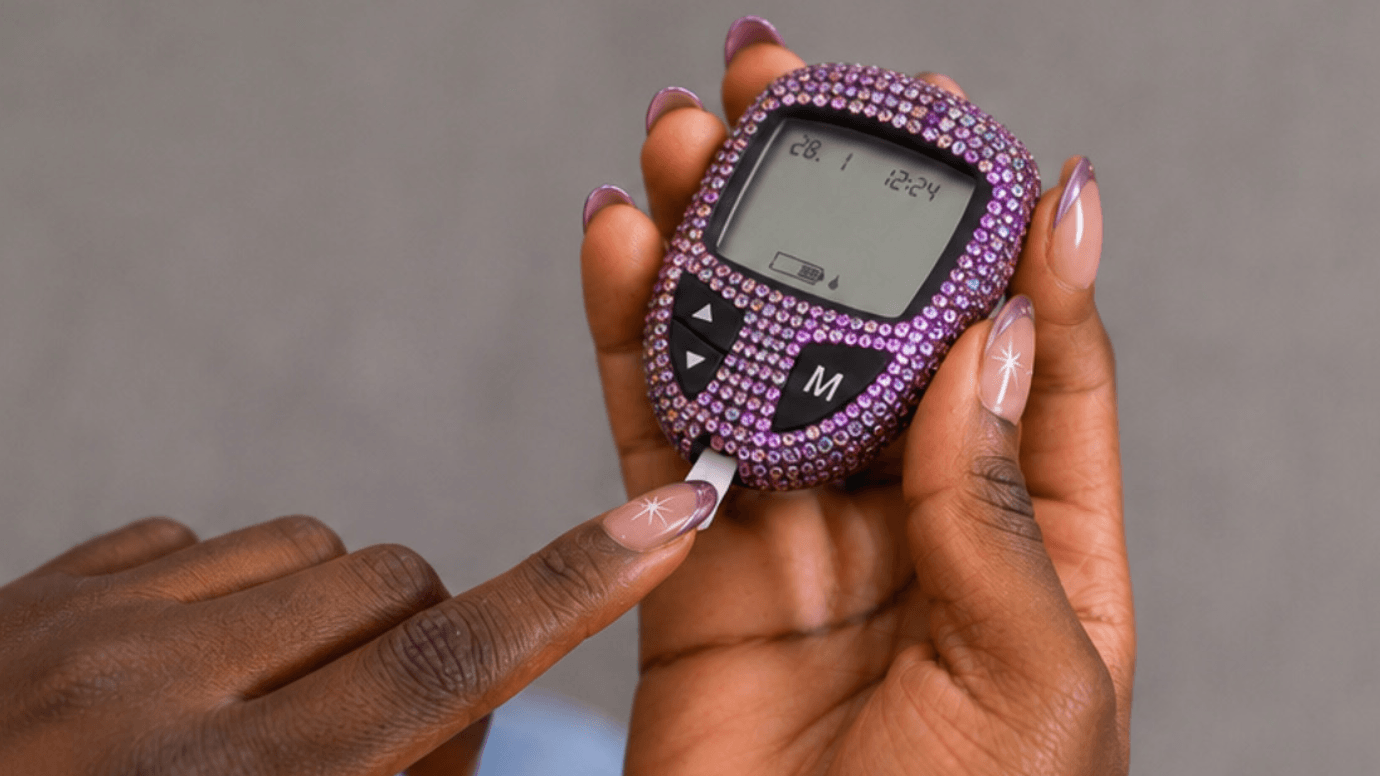
Diabetes sucks sometimes—that includes checking your blood sugar, especially if you’re new to it. It can feel like you’ve failed, but it’s really just a tool to become aware of your body.
If you’re feeling stressed about checking your blood sugar levels while living with type 2 diabetes (T2D), this guide covers some practical tips to work through it so you don’t have to feel anxious all the time. Your fears are valid, and you can work through them!
Why is it important to check your blood sugar with T2D?
If you’re reading this, you’ve probably been told before that it’s important to check your blood sugar when you live with T2D. Recognizing this can help you feel more connected to your health journey and less isolated, but knowing it doesn’t necessarily make it easier to start self-monitoring. Anxiety is tough when it comes to diabetes.
Knowing your blood sugar levels can help you identify your patterns and make any necessary, smart changes to your:
- Nutrition plan
- Activity levels
- Diabetes medications
- Stress levels and more
Research stresses the benefits of self-monitoring your blood sugar, citing that it decreases your chances of diabetes complications over time. No one chooses diabetes, but when it happens, it’s important to do whatever you can to improve your health and reduce your risk of complications.
That’s reason enough to check, but it doesn’t mean your anxiety suddenly vanishes knowing that! If you’re still dealing with blood sugar checking anxiety, keep reading.
Why the thought of blood sugar checking is making you anxious
Understanding why blood sugar checking triggers anxiety can help you challenge those fears. For instance, if you fear pain from finger sticks, exploring ways to minimize discomfort or trying alternative checking methods can empower you to take control and reduce stress around checking.
Members of the T2D community across Facebook and Instagram shared several reasons with Beyond Type 1 about why they get anxious about blood sugar checking, reminding you that these feelings are shared by many. Knowing it’s a collective experience can soften the blow.
Key reasons T2D community members report having anxiety around blood sugar checking included:
- Loading up the lancet/Fear of the needle ejecting
- Pain associated with finger sticks
- Drawing blood/Nauseated around blood
- Anticipating high blood sugars from eating poorly
- Judgment from loved ones or healthcare providers/Unwanted advice or feedback
- Feeling out of control regardless of self-monitoring/Feeling like nothing helps improve diabetes management
Even the thought of checking itself. William Polonsky, PhD, CDCES, confirms this, saying, “Blood glucose monitoring alone can serve as a reminder that diabetes is always there, which is stressful.” These fears are often associated with poorer blood sugar stability, especially among people with T2D who are insulin-dependent (some people with T2D are, but not all).
Not all anxiety comes from the fear of needles or worries about the reading on the meter, though. Financial implications play a role, too. Blood sugar checking supplies can be costly, especially if you need or want to check your blood sugar frequently—worrying about replenishing your blood sugar checking supplies can keep you from doing it, too.
5 ways to work through blood sugar checking anxiety

Feeling anxious and having anxiety are different. Feeling anxious is a situational state that comes and goes and doesn’t feel constant. Sometimes, feeling anxious is even key to our survival, especially for people with diabetes (PWD). Anxiety, on the other hand, can be more hurtful than helpful, as T2D gives it a lot of ammunition.
Anxiety disorders include living in a constant state of feeling panicked, over-anticipating the future, living in a state of “what if?”s and feeling like you’re in fight-or-flight mode most days.
If you’re dealing with blood sugar anxiety, it’s important to take it seriously and to take steps to work through it, not to give yourself permission to opt out because it’s too hard right now. You can make it easier on yourself by offering grace while staying accountable to your health.
Here are five steps to working through blood sugar checking anxiety:
1. Remember, it’s just a number
Blood sugar levels are not moral judgments. There are no “good” or “bad” blood sugar numbers—they are simply data to help you understand your body better. Recognizing this can lessen the fear of high blood sugar readings and encourage a more compassionate view of your progress, making checking less stressful.
PWD are often commended when their readings are “good” and reprimanded when they’re “bad.” But your readings are an educational tool that can support behavior change and lead to a better quality of life. A healthcare provider assigning moral judgment to your blood sugar levels isn’t helping you. It may be time to seek support elsewhere, in that case!
2. Ask for help and set boundaries
If you’re struggling with checking your blood sugar, asking a loved one for help can restore a sense of support and empowerment. You’re in charge of your diabetes and can decide how much support feels right for you. You might even use tools you already use day-to-day, like an Alexa Device, your Notes app or a digital calendar, to help you remember to check your blood sugar if simply remembering just feels overwhelming.
There are many reasons you may be struggling, all of them valid, and luckily—many ways you can get the support you need to thrive. Ideate! Do a little trial and error. Find what works best for you and helps you feel most supported.
3. Consider a diabetes supply subscription service or try generic options
Subscription services can help you save money on your blood sugar checking supplies rather than buying them directly from the pharmacy. And while many off-the-shelf options have improved, if using insurance for your blood sugar checking supplies is important for meeting your deductible, keep pursuing that.
If you don’t care, companies such as Accu-Chek offer products like meters and test strips, and customers can buy a bundle and have it delivered to their homes each month.
Don’t be afraid to swap to generics when insurance wants you to buy the more expensive brand-name. You have options! You don’t have to say yes. Sometimes generics cost less when you don’t run them through insurance than when you do. You can find them at stores like Walmart or Walgreens, or even online with Amazon—places you already shop, making diabetes a little more convenient and accessible.
4. Try new equipment: CGMs can help!
Polonsky says, “Change your lancets or adjust the depth of penetration if your fingers are bruising or if checking is too painful.”
While this can certainly help, continuous glucose monitors (CGMs) are also a welcome relief for many people with T2D, especially those with needle fears. Sure, the sound of the CGM inserting can make you jump, but it’s usually easier to hear one insertion once every 10 to 15 days than to hear a fingerprick several times a day.
Choose your hard—neither one is necessarily fun or easy, but you get to decide which you prefer. Many over-the-counter (OTC) options now exist for PWD who otherwise struggle to get a CGM covered through their insurance. If you’re curious about the benefits of a CGM, check out Dexcom Stelo, Abbott Rio or Lingo. They might be even more affordable than trying to get your insurance to cover one.
Weigh all of your options, and lean on your healthcare team to help you find the best one for you! If you’re a person with T2D who uses insulin, CGMs are recommended by the American DIabetes Association’s (ADA) most recent Standards of Care.
CGMs may not fully replace the need for fingerpricks, but they often greatly reduce it for most PWD who use them. CGMs require their own getting used to, as they may feel like a walking sign you’re living with diabetes, but the more you get used to one, the more this feeling lessens over time. If it makes you feel more comfortable, they are also easy to conceal under clothing as you get used to the idea of wearing one.
For many PWD, they are life-changing advancements in daily diabetes care.
5. Get peer support
Many PWD, online and in person, can relate to your experiences. Reach out to others who may have tips for easing the anxiety and stress of blood sugar checking.
Join Beyond Type 1’s Community App to connect with people with T2D who are going through similar experiences. Checking your blood sugar for the first time, knowing you may have to do it for the rest of your life, is no fun and can feel heavy, pressuring and sometimes even rooted in misconceptions or stigma.
Always remember, this isn’t your fault. No one chooses diabetes. Shame never motivated anyone, including you! Be kind to yourself while staying accountable to your health goals. You deserve to reach for the stars in life with T2D.
Blood sugar checking is a manageable obstacle, just like your T2D. You got this!



Author
T'ara Smith, MS, Nutrition Education
T’ara was diagnosed with type 2 diabetes in July 2017 at the age of 25. Since her diagnosis, she focused her academic studies and career on diabetes awareness and living a full life with it. She’s excited to have joined the Beyond Type 1 team to continue her work. Two years later, T'ara discovered she'd been misdiagnosed with type 2 and actually has LADA. Outside the office, T’ara enjoys going to the movies, visiting parks with her dog, listening to BTS and cooking awesome healthy meals. T’ara holds an MS in Nutrition Education from American University.
Related Resources
Diabetes is kind of mean. If diabetes were personified and life were a “Mean Girls”...
Read more
The most obvious benefit of using insulin is lowering your A1C and reaching your blood...
Read more
Have you ever wondered how treatments for type 2 diabetes (T2D) were developed? The main...
Read more