Can the Birthplace of Insulin Change How You Feel About Diabetes? My Visit To The Banting House
Written by: Christine Fallabel
7 minute read
July 27, 2026
This summer, I’m celebrating 26 years of living with type 1 diabetes (T1D). The changes in insulin and technology since 2000 are sometimes wild to me.
When I was diagnosed, daily management looked like strict carb-counting, multiple daily injections with animal insulin, routine and timed meals and snacks, and attempting to test my blood sugar many times per day with a finger prick and 60-second countdown glucometer—on a good day.
It was also full of unexpected lows, unmanageable dawn phenomenon, taking insulin injections in public bathrooms, stubborn high A1Cs and hiding my diabetes in school from friends and classmates.
Today, my management is much smoother: I check my blood sugar and take insulin with my smartphone, I loosely count carbohydrates with the help of my automated insulin delivery (AID) system, I’ve achieved an A1C below six for the past 10 years and I am proud of my life with diabetes. Hiding it would be the antithesis of who I’ve become.
On better days, gratitude comes easily to me. When my tech is teching and my blood sugars are largely behaving, the burden feels manageable, even if it never fully disappears. But there are also the days of burnout and overwhelm, and after 26 years, they come often.
Diabetes is relentless. It has a way of narrowing our focus to the daily frustrations directly in front of us. Gratitude easily drops by the wayside. And that was why my visit to the Banting House surprised me in ways I never could have imagined.
Inside the birthplace of insulin
My husband and I have wanted to visit the Banting House for years. We’re both history buffs, so we were excited for a bit of a tour and to learn more about the discovery of insulin.
Known as the “birthplace of insulin” in London, Ontario, Canada, the Banting House is where Sir Frederick Banting lived and reportedly woke up in the middle of the night on October 31, 1920, with the idea that would ultimately lead to the discovery of insulin.
At 2 a.m. on October 31, he scribbled a 25-word note in his notebook: “Diabetus (sic) – Ligate pancreatic ducts of dogs. Keep dogs alive till acini degenerate, leaving islets. Try to isolate the internal secretion of these to relieve glycosuria (sic).”
In the middle of the night, he came up with an idea: what if you tied off the tubes in a dog’s pancreas that carry digestive juices? The digestive cells would die off, but the tiny clusters of cells that make a special hormone would survive—and Banting believed those clusters held the key to controlling blood sugar. He was right. That hormone was insulin.
Standing in that small house, it’s hard not to feel the magnitude of what happened there—one of the greatest medical discoveries in history started in that very room.
Today, insulin is so woven into the fabric of diabetes care that many of us rarely stop to think about its origin story. We’re so entangled in prior authorizations, insurance denials, deductibles and monthly insurance premiums, that we forget it’s all a miracle.
A little over 100 years ago, none of this would have been possible. A little over a 100 years ago, a type 1 diabetes diagnosis was a death sentence.
What’s been preserved inside the Banting House
Dr. Banting moved to 442 Adelaide Street in London, Ontario, in June 1920, using the ground floor for his budding medical practice and the upper rooms as his living quarters. The home is now a national historic site in Canada.
A walk through the house is a walk through history, where much of the home has been preserved. The bedroom where Sir Frederick Banting slept still has the original floral wallpaper, and museum guests are encouraged to sit on his bed (although the original has since been replaced).
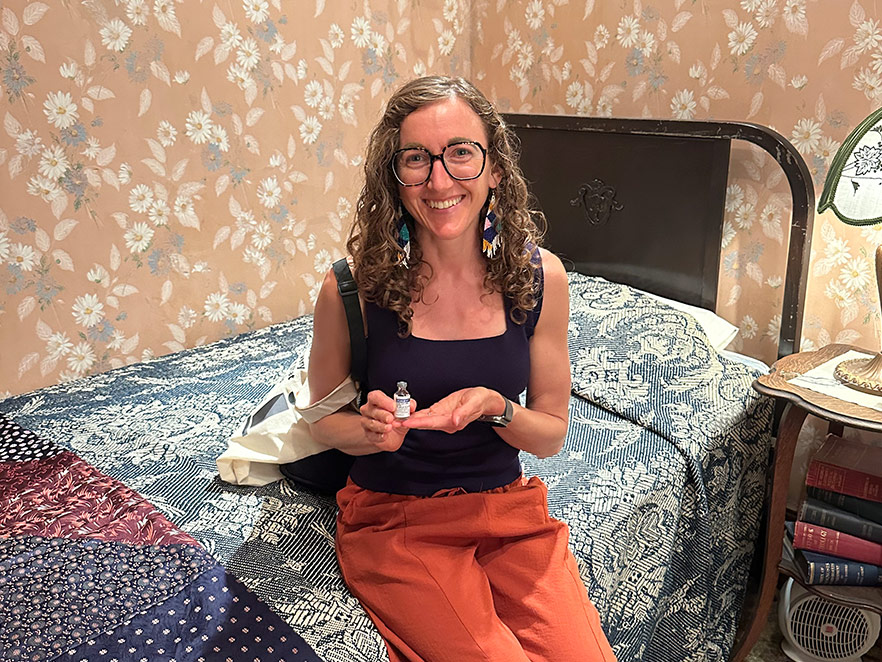
The carpets in the hallway are worn thin from the thousands of visitors who travel from around the world to walk those same floors.
Teddy Ryder: one of the first people treated with insulin
The museum also has many historical relics, including one of the first insulin vials ever used on a human—that of Teddy Ryder.
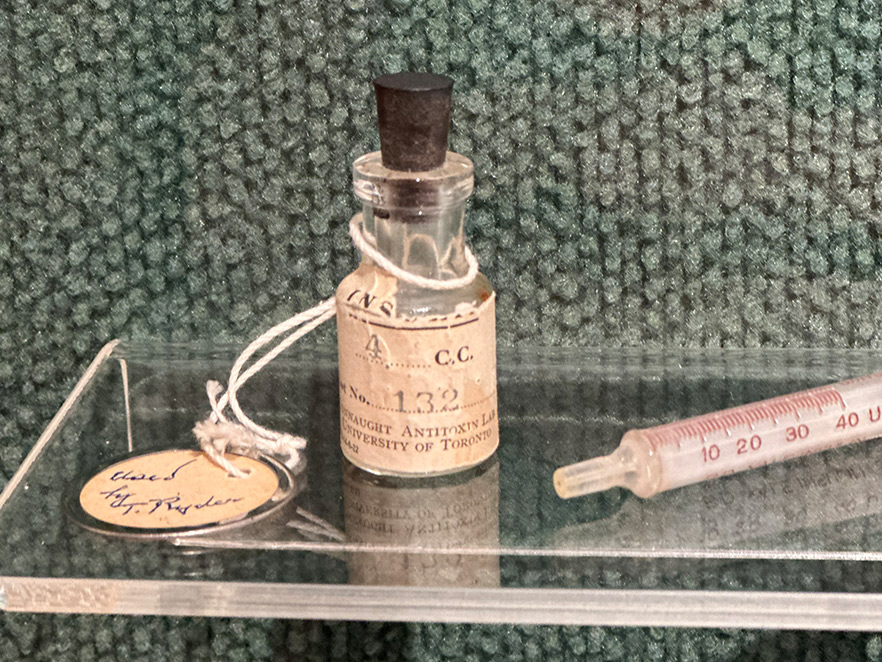
Teddy was one of the first 12 people in the world treated with insulin. His parents traveled to Toronto, Canada, from their home in Keyport, New Jersey, shortly after his type 1 diabetes diagnosis and learned about the miraculous medical discovery of insulin, from the Toronto Star newspaper in the spring of 1922.
Teddy had survived for months on the Allen Diet, which was a form of radical calorie and carbohydrate restriction to the point of starvation. The Allen Diet was commonly recommended to children diagnosed with type 1 diabetes to buy them time until a treatment was found, with an average life expectancy of only 1-2 years. On the cusp of death, Teddy received his first insulin shot on July 10, 1922, weighing just 27 pounds.
One year later, on July 10, 1923, Teddy was healthy and thriving, weighing in at 45 pounds. In a thank you note to Dr. Banting, Teddy wrote, “I am a fat boy now, and I feel fine.”
Teddy lived 71 years on insulin therapy. He was also Dr. Banting’s last surviving insulin patient. He died in 1993 at the age of 77.
Soon after, news of this miraculous medical discovery spread across the world, and Dr. Banting became famous, appearing in newspapers and on magazine covers all over the world. Millions upon millions of people with previously untreatable type 1 diabetes were suddenly thriving with proper treatment.
This notoriety culminated in him winning the Nobel Prize in Physiology/Medicine with John Macleod (who owned the lab he worked in) in 1923. To this day, he is still the youngest Nobel laureate for Physiology/Medicine, at age 31.
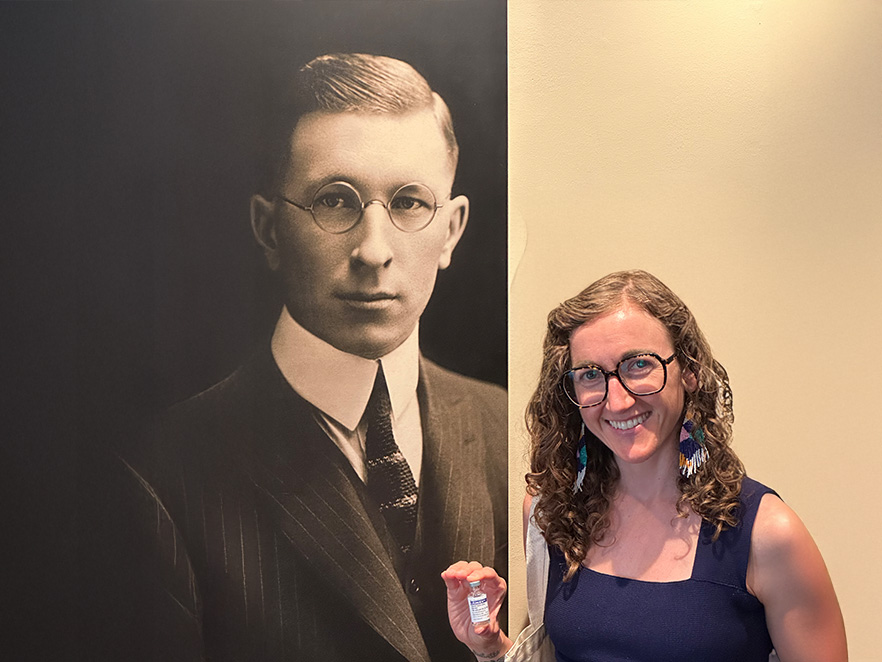
Notably, Dr. Banting sold the patent for insulin to the University of Toronto for a single Canadian dollar, stating that, “insulin does not belong to me, it belongs to the world.”
And 100 years later, his brilliance continues to save and maintain lives.
The human trajectory changed
Walking through the Banting House, I found myself thinking less about the discovery of insulin itself and more about the people whose lives were forever transformed because of it. 1920 is not that long ago. Teddy Ryder passed away when I was six years old. The type of insulin he was using at the time of his death was the same insulin I used when I was first diagnosed. The recency of it all still shakes me to my core.
Dr. Banting allowed entire generations of people living with diabetes to literally grow up. To go to college, to fall in love, to get married, to travel, to work, to play, to rest, and to live out their dreams. Millions of people, including me.
It’s all too easy to get consumed by what isn’t working in diabetes care — the CGM sensor that falls off after a swim in the ocean, the insulin vial that shatters when it slips out of your hand during a pump change. And beyond the day-to-day frustrations, the bigger picture is still hard: insulin remains unaffordable for far too many people around the world, and diabetes technology isn’t accessible to everyone who needs it.
But what I came to realize at the Banting House was that advocacy and gratitude are not opposing forces. Instead, they strengthen one another: they push the work forward while reminding us how incredibly lucky we are to live in a time when diabetes is treatable and livable.
The Flame of Hope
My final stop at the Banting House was visiting the Flame of Hope, which is an eternal flame that was lit by Queen Elizabeth in 1989 in the garden of the Banting House, honoring Dr. Banting’s discovery of insulin and supporting all those still affected by diabetes worldwide.
The flame will only be extinguished when a cure for diabetes is found. The research team responsible for finding the cure will be flown in to extinguish the flame.
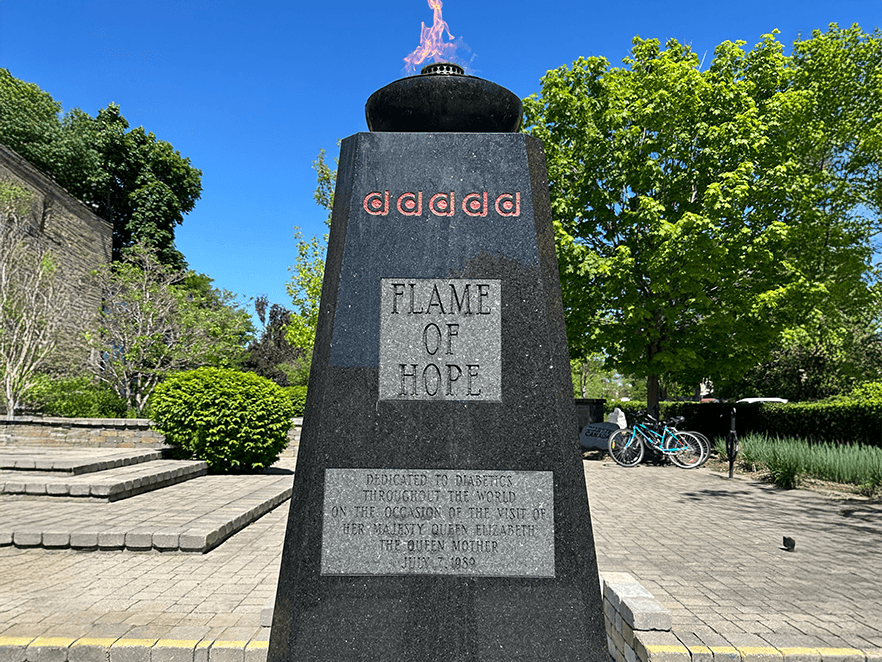
I’ve wanted to visit the Flame of Hope for many years, so this pilgrimage was very special to me. And looking into the flame, my diabetes burnout disappeared and was replaced with gratitude for how far we’ve come, and how close we are, now more than ever, to finally extinguishing this flame for good.
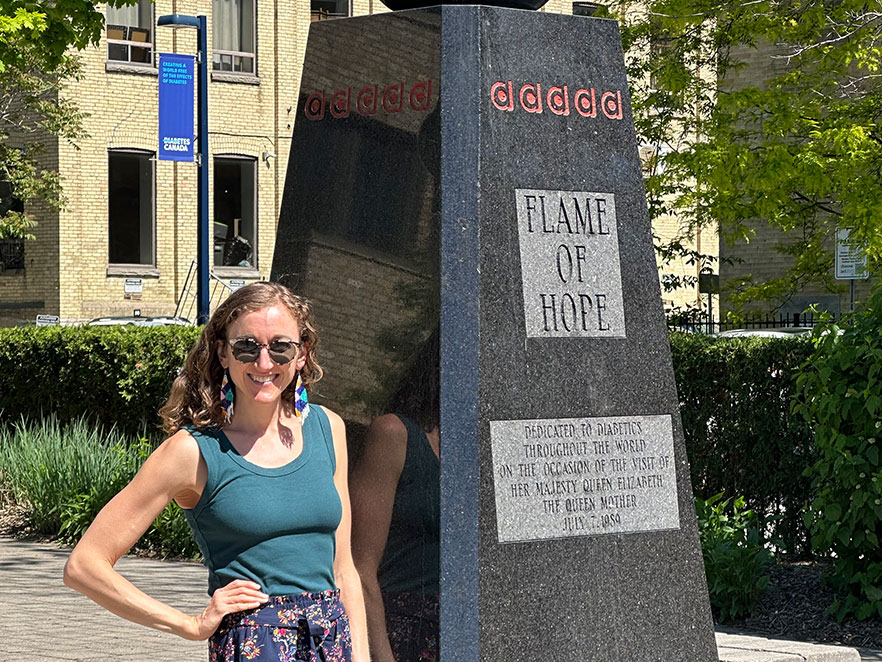
And I trust that I will be back for that ever-elusive extinguishing ceremony. I’ll meet you there.



Author
Christine Fallabel
Related Resources
If you would like to better support a friend or family member who is living...
Read more

Topic sensitivity warning: This guide mentions suicide and mental health challenges. Please read it at...
Read more

If you are the parent of a young child with type 1 diabetes (T1D), you...
Read more