Diabetes Tech Burnout + When It Might Be Time for a Break
Written by: Christine Fallabel
5 minute read
April 6, 2026
For many people living with diabetes, technology has been life-changing. Insulin pumps, continuous glucose monitors (CGMs), and automated insulin delivery systems (AIDs) have helped us achieve tighter time-in-range, fewer severe lows and more confidence overnight.
These tools and technologies have made life with diabetes more manageable and livable than ever before. But sometimes our bodies and minds need a break from constant connection. And there is something quietly powerful about taking an intentional break, whether that’s for a summer, a vacation or even just a reset.
Why take a diabetes technology break?
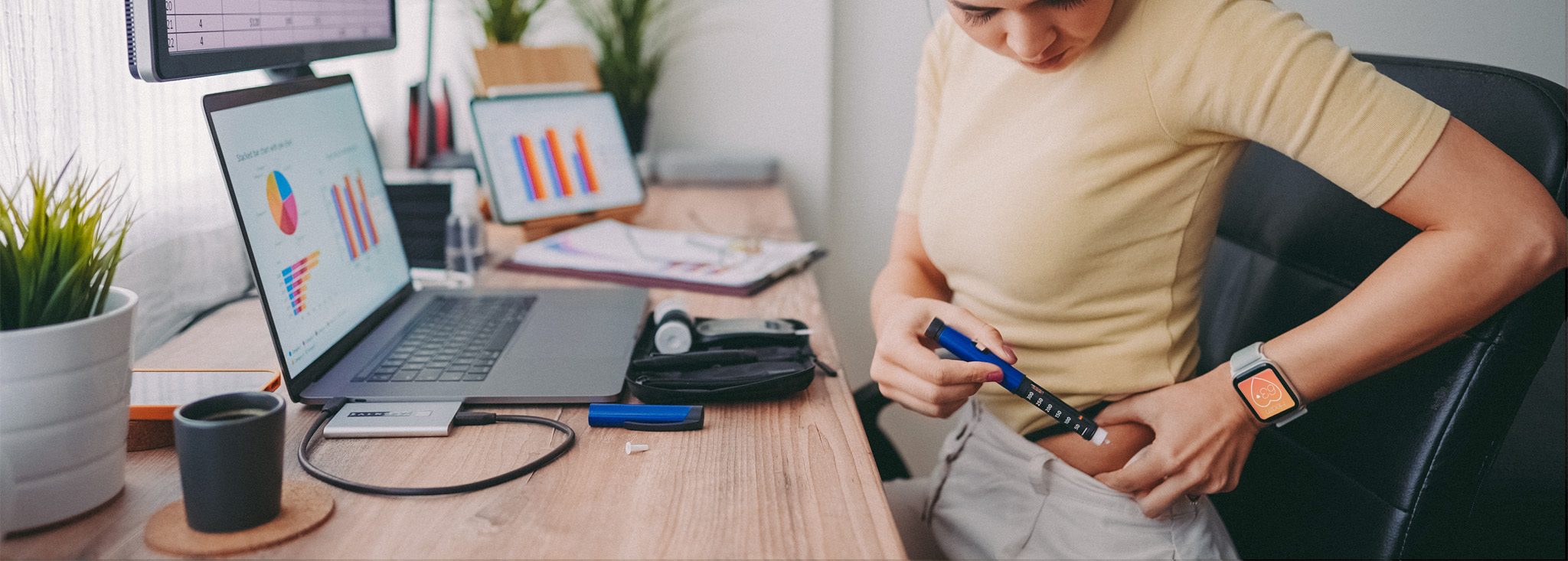
Going back to multiple daily injections (MDI) and manually checking blood glucose can feel like taking a step backwards when everything seems to be defined by innovation.
But sometimes, stepping away from the algorithm helps us reconnect with ourselves. Information overload and constant connectivity to our (diabetes) devices can be draining. And sometimes, our bodies are crying out for a rest.
Simplicity
Technology brings data—lots of data. With that data comes alerts, aggressive arrows, predictive warnings, software updates, site changes, scar tissue, blue light at bedtime, adhesive reactions, sites that fall off or sometimes won’t come off unless you pry, low battery life and supply logistics. The list goes on.
Even when all systems are working beautifully, it is always on. For some of us, especially after long stretches of burnout, the constant stream of notifications and mental labor can feel relentless.
Much like taking a social media break, a diabetes tech break can slow everything down. MDI and fingersticks can change the pace of your day. You can check your blood sugar when it works for you. You can respond to your body based on how you feel.
Not chasing every five-minute fluctuation means there is space between numbers again. And when you’re on vacation, that space can be liberating. You can swim without worrying about a pump site. You can dress without negotiating tubing. You can step outside—and dare we say, take a dip in the ocean— without thinking about signal loss.
Check with your doctor about dosing and translating basal rates to long-acting doses safely before completely unplugging.
Reconnecting with core diabetes skills
Many people newly diagnosed with diabetes are put on technology almost immediately, and for good reason! Diabetes technology can help you appropriately dose for carbohydrates when you’re new to carb-counting, and tech can detect high and low blood sugar levels before they become dangerous. Technology has made living with diabetes easier than ever, especially if you’re newly diagnosed.
However, after a while, many people forget how to precisely count carbohydrates and manually bolus for a meal. (Remember diabetes math?) Even scarier, people can sometimes lose the sensation of what low blood sugar even feels like. This is called hypounawareness.
When we rely solely on CGM technology to tell us when we’re going low, it can be easy to rely on it 100%of the time and to stop listening to our bodies.
Taking a technology break can get those sensations and gut feelings back, putting us in the driver’s seat of our diabetes management again.
Returning to injections and manual testing sharpens our awareness of insulin timing, correction factors, carb counting, and the subtle physical cues our bodies give us. You can feel a rising blood sugar again before you confirm it. You can sense your lows and trust what you’re feeling.
Reconnecting to your resilience
Technology is fantastic, but it doesn’t (and won’t) work perfectly all of the time.
If a device fails in the future, as they sometimes do, you know you can manage confidently without it. That sense of self-reliance is not anti-technology. It is power, and that is a beautiful thing.
Regaining bodily autonomy
Wearing devices 24/7 can sometimes blur the line between assistance and intrusion. Gummy adhesives that won’t come off. Plastic cannulas under every pair of jeans. A device attached during sleep, exercise and travel.
Choosing to take a break can bring about a sense of physical freedom. Your skin has time to heal. Scar tissue can rest. You get to decide when and where to take insulin.
For many people, especially in the summer months, that freedom is priceless and visible. It can mean sundresses without infusion set tan lines, bathing suits without tubing, salt water and sand without signal loss. Sometimes it’s just easier to pack pens and strips than to navigate backup transmitters and batteries.
Restore your mental health
Sometimes, a diabetes tech break is needed simply for mental health–a reason that’s just as good as any other, and frankly, not talked about enough.
Diabetes technology produces a lot of data on a daily basis. But more data does not always mean more peace of mind. For some, especially during times of stress or life transition, constant metrics and data trends can spike anxiety and diabetes distress. A planned technology break can be a way to reduce mental load, which can help you focus on experiences rather than numbers.
Choose what works best for you
For some people with diabetes, this tech-free experience is extremely freeing. For people with hypoglycemia unawareness, technology provides essential safety. And for others, the off-ramp of diabetes tech for a short trip just isn’t worth the mental load that a more manual management system requires. And that’s okay.
A break should always be thoughtful, supported by your doctor, and tailored to your personal diabetes and mental health needs.
Living well with diabetes is not defined by the tools we use. It’s defined by the ability to live well every day. But we should normalize that it is okay to choose differently for a season. As they say, your diabetes may vary (YDMV).
People often talk about innovation as forward motion. But sometimes stepping back strengthens your ability to move forward. Diabetes has never been a sprint. It’s a lifelong marathon, and sometimes even a marathon requires a break.
Ready to detach but stay plugged in? Join our online community for resources and to connect with others living with diabetes.


Author
Christine Fallabel
Related Resources

Sensitive Topic Warning: This article discusses anxiety, stress, depression and mood swings, which may be...
Read more

First responders bring to mind 911 emergencies where paramedics respond to provide lifesaving care. But...
Read more

If you live with diabetes and take insulin, you've probably heard of diabetic ketoacidosis (DKA),...
Read more