5 Foam Roller Exercises to Improve Circulation for People with Diabetes
Written by: Christine Fallabel
7 minute read
May 14, 2026
Trying to take better care of yourself when you live with diabetes can sometimes feel overwhelming. Between managing blood sugars, medications, exercise, appointments and everything else life throws your way, adding another task can feel like a lot.
But improving circulation and muscle health doesn’t have to mean long workouts, expensive gym memberships or complicated routines.
Sometimes it can be as simple as spending five to 10 minutes with a foam roller in the comfort of your own home.
Foam rolling is a form of self-massage that gently releases tight fascia, which is the connective tissue surrounding muscles. Foam rolling encourages blood flow through areas that may ache or feel stiff. And for many people living with diabetes, that circulation boost can be especially helpful.
Why people with diabetes are more likely to have muscle tightness
After workouts or even as we age, people with diabetes may notice tighter or more fatigued muscles than normal. There are a few reasons for this.
Higher blood sugars over time affect circulation, connective tissue elasticity and nerve signaling. When fascia becomes less flexible, muscles don’t glide as easily during exercise, which can lead to stiffness and soreness.
People with diabetes may also experience:
- Reduced circulation in the lower legs
- Subtle nerve changes over time
- Dehydration of connective tissue
All of these can contribute to muscles that feel stubbornly tight.
The good news is that soft tissue work, like foam rolling, can help restore mobility and encourage blood flow. It is especially important for the legs and hips, where circulation challenges tend to show up first.
All it takes is between five to 10 minutes of foam rolling per day to see a difference. Each of the following five exercises can be done for between 30 and 60 seconds each to feel a noticeable difference in your body.
Foam rolling routine
Try these five different exercises to improve circulation and loosen muscle tightness.
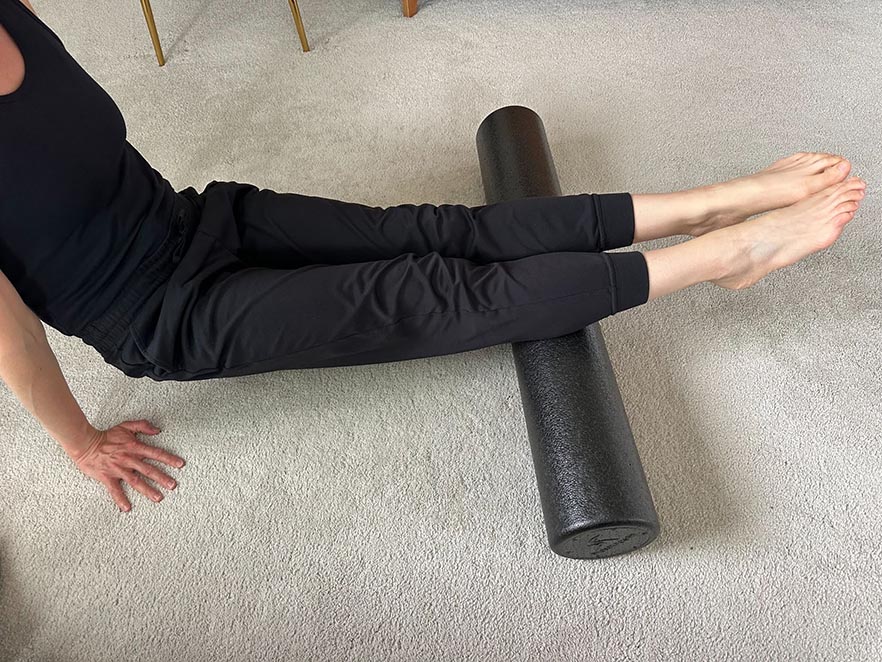
Calf roll
Calf rolls are one of the most helpful places to start, especially for people with diabetes who may notice tightness in the lower legs and calves.
Why it helps: The calves play a big role in helping pump blood back toward the heart. Releasing tightness here can encourage circulation through the lower legs and feet—extremities that often suffer the most from low circulation and neuropathy in people with diabetes.
How to do it:
- Sit on the floor with your legs extended.
- Place the foam roller under your calves.
- Support your body with your hands behind you.
- Lift your hips slightly and roll from your ankles up toward the back of your knees.
- Move slowly and pause in tight areas.
Time: 30 to 60 seconds
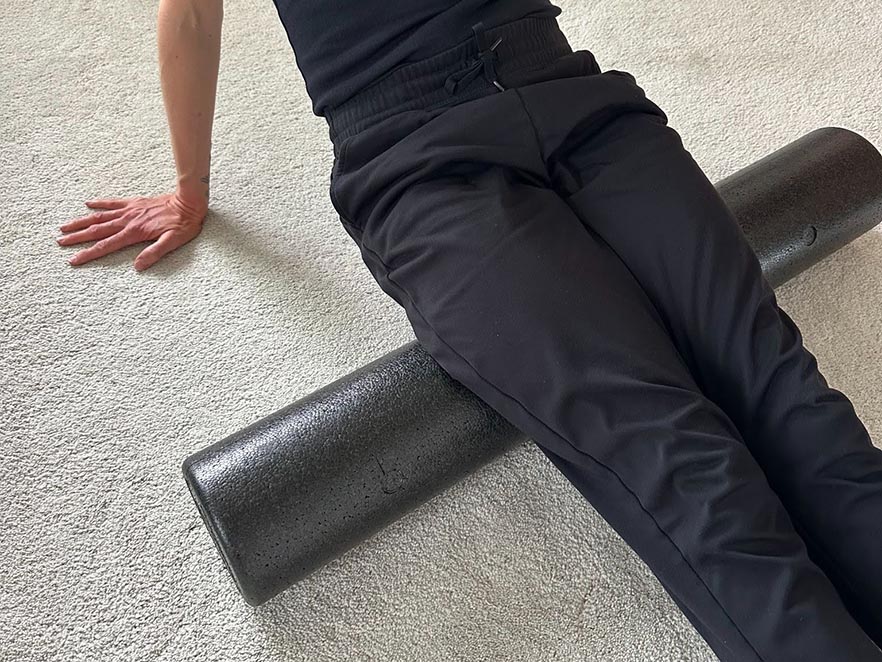
Hamstring roll
If you sit at a desk or spend long hours driving, your hamstrings may be tighter than you realize.
Why it helps: Loosening the hamstrings improves hip and lower back mobility, which can make walking and daily movement easier.
How to do it:
- Sit with the foam roller under the backs of your thighs.
- Place your hands on the floor for support.
- Lift your hips slightly.
- Roll from just below your glutes down toward the back of the knees. If you want to increase pressure, cross one leg over the other while rolling.
Time: 30 to 60 seconds
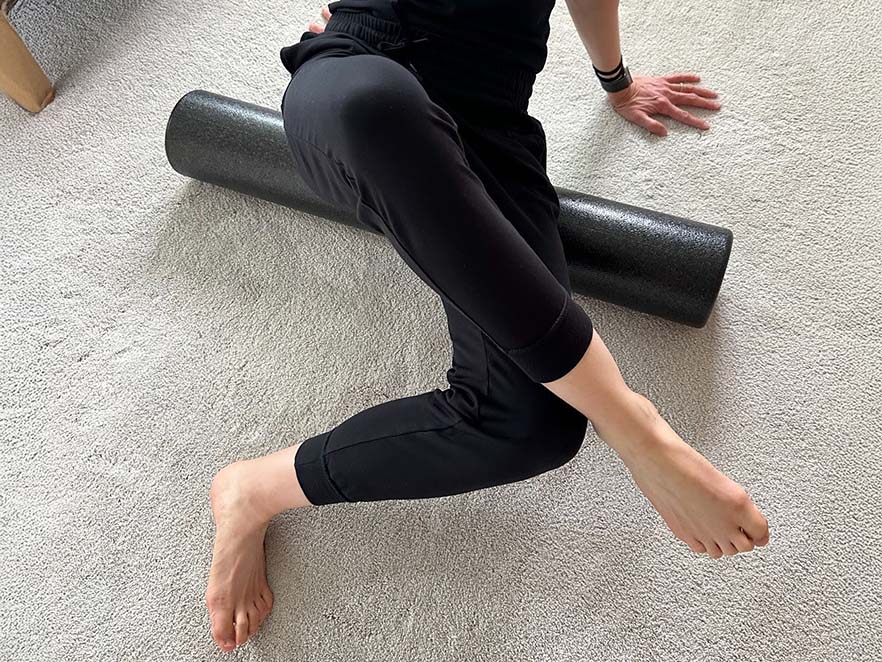
Glute roll
The glutes are some of the strongest muscles in the body, but they can also become some of the tightest, especially if we sit for long periods.
Why it helps: Releasing tension in the glutes can reduce pressure on the hips and lower back while improving blood flow and circulation through the pelvis and upper legs.
How to do it:
- Sit on the foam roller.
- Cross one ankle over the opposite knee (a figure-four shape
- Lean toward the side of the crossed leg.
- Roll slowly over the glute muscles.
Time: 30 to 60 seconds on each side
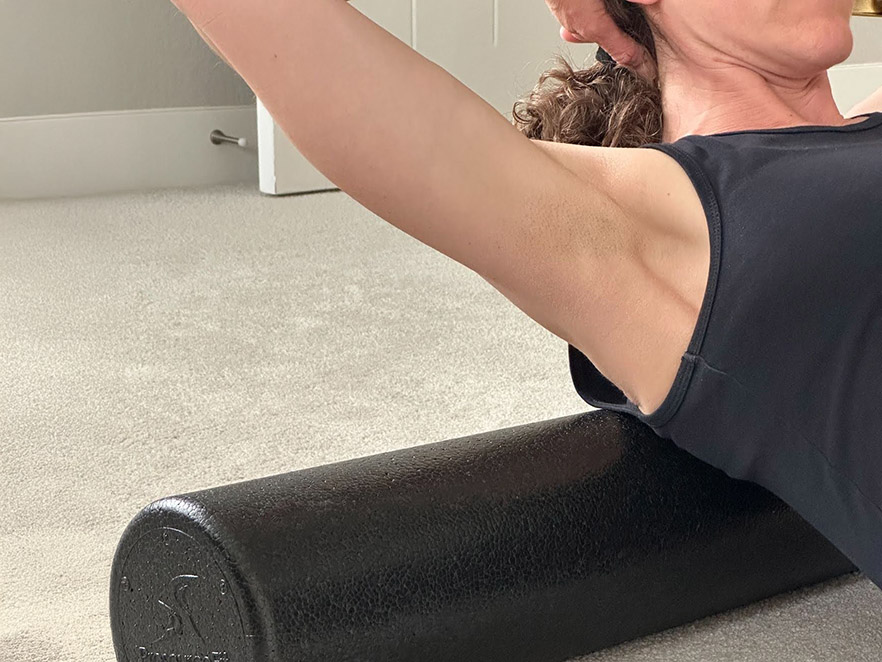
Upper back roll
Stress and poor posture can compress the upper back, and this exercise can help to stretch it out.
Why it helps: Releasing the upper back helps improve posture and ease breathing, which can support better overall circulation.
How to do it:
- Lie on your back with the foam roller under your shoulder blades.
- Bend your knees with your feet flat on the floor.
- Support your head with your hands.
- Slowly roll a few inches up and down through the upper back.
Avoid rolling directly on the neck.
Time: 30 to 60 seconds
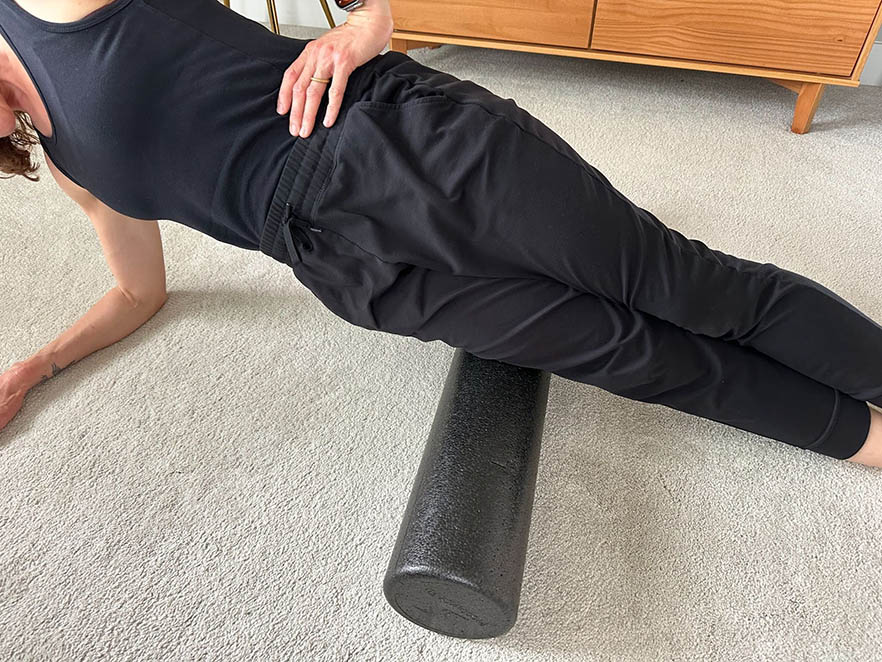
Outer thigh (IT band) roll
This area can be extremely sensitive and tight, so go slowly.
Why it helps: Loosening this area can increase circulation, improve hip mobility, and reduce strain in the legs.
How to do it:
- Lie on your side with the foam roller under your outer thigh.
- Support your body with your forearm and your opposite foot.
- Roll slowly from your hip toward your knee.
Time: 30 to 60 seconds per leg
Foam rolling: a small habit that adds up
With foam rolling, a little can accomplish a lot.
Five minutes or so of foam rolling a few days per week can be enough to loosen tight muscles and increase blood circulation, especially if you live with diabetes.
And it’s a small reminder that taking care of your body doesn’t have to take hours per day or be complicated.
Want to connect with a community that gets what it’s like to live with type 1 diabetes? Join our online community for more resources and tools!


Author
Christine Fallabel
Related Resources

Sensitive Topic Warning: This article discusses anxiety, stress, depression and mood swings, which may be...
Read more

First responders bring to mind 911 emergencies where paramedics respond to provide lifesaving care. But...
Read more

If you live with diabetes and take insulin, you've probably heard of diabetic ketoacidosis (DKA),...
Read more