How to Bolus for Pad Thai
Written by: Lydia Mack
6 minute read
August 10, 2026
Pad thai presents a unique challenge for people with diabetes because of its combination of high-glycemic carbohydrates and hidden sugars.
The flat rice noodles used to make pad thai digest quickly, which can cause a rapid initial spike in blood sugar. On top of that, the signature sauce that people love in pad thai is made of palm sugar and tamarind paste—two ingredients that add a significant sugar load that catches a lot of people off guard.
What ingredients are in pad thai?
To account for all the carbs in pad thai, first we need to look at what goes into the dish. The main ingredients include:
- Flat rice noodles
- Eggs
- Protein, usually shrimp or tofu
- Dried shrimp
- Bean sprouts
- Garlic chives
- Peanuts
- Fish sauce
- Palm sugar and tamarind-paste for the sauce
This makes pad thai a mixed-macronutrient meal—flat rice noodles for carbs, fat from peanuts and egg, and protein, usually from shrimp or tofu. And of course, the star of every pad thai is the sauce, which gets its sweet and salty flavor from a combination of fish sauce, palm sugar and tamarind paste.
A single restaurant serving of pad thai can contain anywhere between 60–90 grams of carbohydrates or more, depending on portion size and how the dish is prepared.
How many carbs are in pad thai?
One cup (8 oz) of cooked flat rice noodles is roughly 45g of carbs—and that’s before the sauce. Traditionally, pad thai’s signature flavor comes from a balance of sweet, salty and sour. But Thai restaurants in the United States tend to dial up the sweetness to suit the American palate, which adds to the sugar load. Then factor in that restaurant portions can run three, four or five servings depending on where you go, and the carbs add up fast.
That combination—fast-digesting noodles, a sugary sauce, and a large portion—can cause a rapid initial spike in blood sugar. At the same time, the fat from peanuts and egg and the protein from shrimp or tofu slow digestion, which means levels may keep rising for several hours after you finish eating. You’ll need a mealtime insulin strategy to account for both.
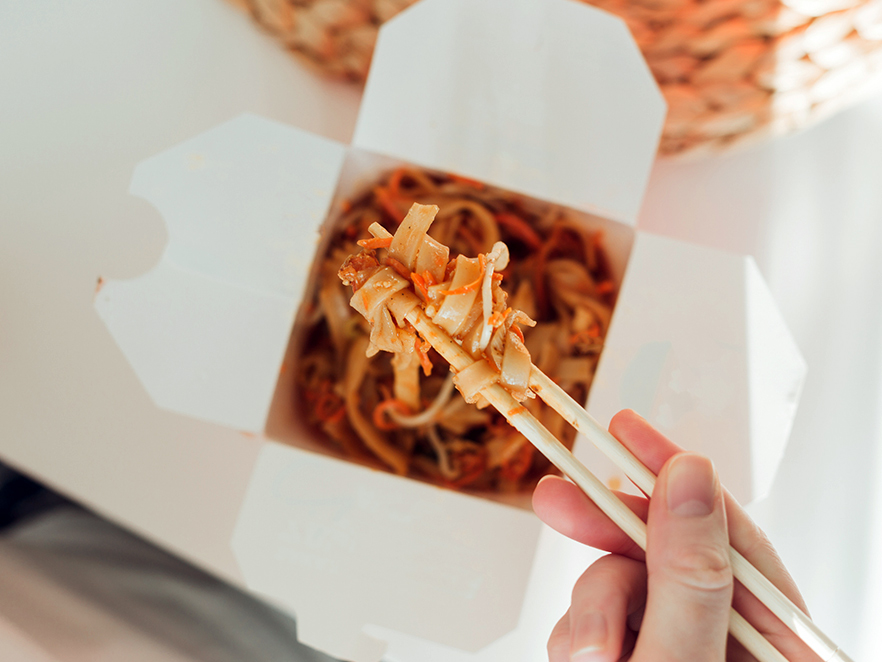
How do you bolus for pad thai with an insulin pump?
A standard bolus taken right before eating may cover the initial spike but miss the delayed rise from pad thai. Splitting your bolus—taking a portion before eating and delivering the rest over one to two hours using your pump’s extended bolus feature—can help manage that second wave. For this option, work with your healthcare provider (HCP) to find the right split for you.
Step 1: Estimate your carbs before you order
One cup (8 oz) of cooked flat rice noodles is approximately 45g of carbs. That’s the bulk of your pad thai right there.
When you factor in the sugar and tamarind-based sauce, a standard serving of pad thai might have anywhere between 60–90 grams of carbohydrates. When in doubt, estimate on the higher end and monitor closely.
Step 2: Check your pump
While you’re waiting for your food, confirm your reservoir has enough insulin and that your infusion set is working properly. Also check that your extended bolus feature is accessible—you may want to use it for a meal like this. A pre-meal pump check takes 30 seconds and can prevent a frustrating post-meal correction.
Step 3: Pre-bolus and extend or split your bolus
Pad thai noodles can cause an initial, rapid spike in blood sugar. But the fat and protein content can slow digestion. To accommodate this, you can try splitting your dose, under the guidance of your healthcare provider.
If you use an automatic insulin delivery (AID) system, your pump may also factor in your current glucose level and active insulin when calculating the dose. If you underestimate your carbs or forget to bolus, some AID systems include technology designed to detect rapid rises in blood sugar and automatically deliver correction doses to help bring levels back in range.
Step 4: Monitor your blood sugar after eating
Keep a close eye on your levels for two to four hours after your meal. Pad thai’s combination of fast carbs and fat-slowed digestion means you might not feel the full impact on your blood sugar until you’re well past the one-hour mark. Have a correction dose ready if needed.
Tips for eating pad thai at a Thai restaurant
What to do before your food arrives
- Order your pad thai less sweet. When you place your order, ask your server for your pad thai “less sweet.” Most Thai restaurants will accommodate the request. It’s one of the most effective things you can do to lower the carb load before the dish even gets to your table.
- Order a non-starchy vegetable side dish. Fiber from the vegetables help slow carbohydrate absorption from the noodles, which may soften the blood sugar spike. It also helps with fullness, which may naturally limit how much pad thai you eat. The Diabetes Plate Method suggests filling half of your plate with non-starchy vegetables.
- Administer insulin before eating. Remember to administer insulin before eating, as current rapid-acting insulin isn’t as fast as the body’s own. To effectively manage blood sugar when you start eating, it should be given 15-20 minutes prior to meals.
- Know your insulin on board (IOB). Your insulin pump keeps track of insulin that’s still active in your body from a bolus dose, which can continue to bring glucose levels down. If your glucose is high, it’s helpful to know if you have any insulin remaining from what you gave for your meal when deciding whether to give a correction dose or not.
What to do when your food arrives
- Eat your vegetables first. Food sequencing, which is eating a low-carb, high-fiber food before a high-carb dish, can lead to a more gradual rise in blood sugar levels.
- Pre-portion your noodles. Thai food is traditionally meant to be eaten family style, so restaurant portions of pad thai are also often larger than a standard, single serving. Before you start eating, measure out roughly one cup of noodles (8 oz) on to your plate. This gives you a more accurate carb estimate to bolus for, and removes the temptation to keep eating past your intended amount.
- Give your bolus. Enter your estimated carbohydrate count and deliver your bolus.
What to do after you eat
- Monitor your blood sugar for two to four hours after eating. Pad thai’s mix of fast-digesting carbs and slower-digesting fat and protein means levels can keep climbing long after you finish your meal.
- Factor in IOB before correcting. If your blood sugar is running high after your meal, check how much insulin is still active from your meal bolus before giving a correction dose. Stacking insulin without accounting for what’s already on board can lead to a low later on. When in doubt, consult your pump’s bolus calculator or check in with your care team about your correction strategy for high fat, high carb meals.
You can enjoy pad thai with T1D
Pad thai doesn’t have to be off limits if you live with type 1 diabetes. Order it less sweet, pair it with vegetables, pre-portion your noodles and use your pump’s extended bolus feature to cover the slow burn. A little preparation goes a long way, and the dish is absolutely worth it.


Author
Lydia Mack
Related Resources

If you are the parent of a young child with type 1 diabetes (T1D), you...
Read more

If you stumbled on this guide, odds are you’re dating someone with type 1 diabetes...
Read more

Sensitive Topic Warning: This article discusses anxiety, stress, depression and mood swings, which may be...
Read more