How to Enjoy the Outdoors With Diabetes + Avoid Low Blood Sugars
Written by: Christine Fallabel
6 minute read
June 12, 2026
In a perfect world, you would be able to enjoy your favorite outdoor activities without worrying about hypoglycemia. However, we don’t live in a perfect world, and living with diabetes means that you will go low from time to time.
While it isn’t possible to completely prevent 100% of lows, this article will show you how to help prevent hypoglycemia while enjoying outdoor activities or traveling.
What is hypoglycemia?
Hypoglycemia is also known as low blood sugar. Hypoglycemia happens when there is too much insulin in your body than your body needs at that moment. This can happen when you inadvertently take too much insulin, eat fewer carbs than expected, or exercise more than usual. Technically, a low blood sugar occurs at any level at or below 70 mg/dL (3.9 mmol/L). Severe low blood sugar levels occur when your blood sugar drops below 55 mg/dL (3.1 mmol/L).
Symptoms of hypoglycemia include:
- Blurred vision
- Cold sweats
- Confusion
- Cool, pale skin
- Difficulty concentrating
- Drowsiness
- Excessive hunger
- Feeling anxious
- Fast heartbeat
- Headache
- Nausea
- Nervousness
- Nightmares
- Restless sleep
- Shakiness
- Slurred speech
- Sudden changes in behavior—either aggressive or goofy (in adults, they might seem drunk without drinking)
- Unusual tiredness or weakness
Low blood sugar can be caused by many things: physical activity, heat, stress, taking too much insulin for carbohydrates eaten, going long periods of time without food or not eating enough carbohydrates.
Hypoglycemia can happen at any time, especially if you’re enjoying outdoor activities. As the weather gets warmer and people are more active outdoors, the symptoms of hypoglycemia may closely resemble heat exhaustion, such as dizziness, sweating, fainting, rapid heartbeat and fast breathing. This can make it harder to identify low blood sugar as it’s happening.
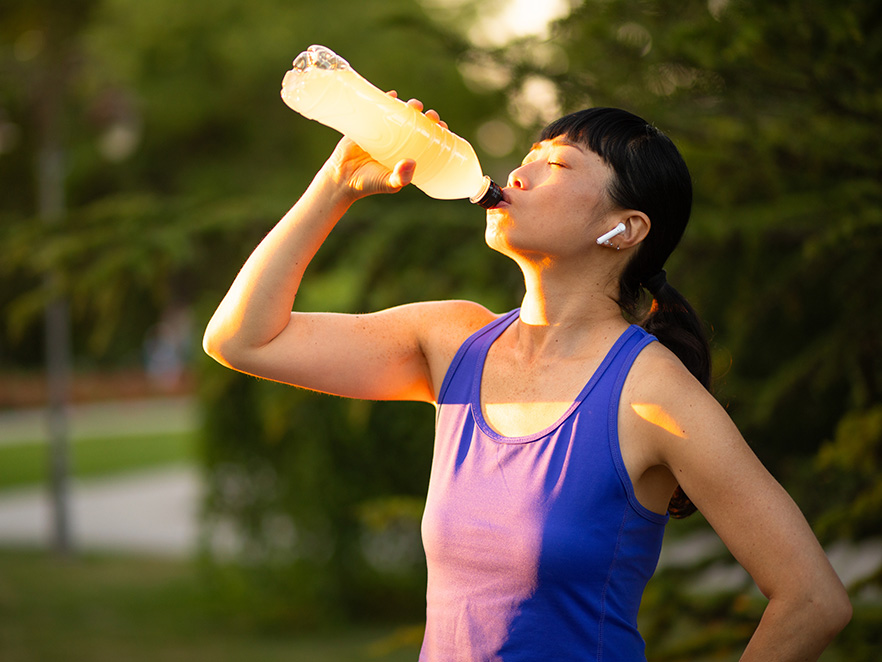
Tips to help prevent hypoglycemia when you’re active
Before starting your activity
- Check your blood sugar. If your blood sugar is already low, wait to exercise when it rises to a safer level. Depending on your blood sugar level, your next steps might be to eat fast-acting carbs to fuel your activity based on these American Diabetes Association guidelines.
- Pack low snacks. This can be glucose tablets, candy, sports drinks or any fast-acting carbs.
- Bring your supplies. Keep extra test strips and lancets or set alerts on your continuous glucose monitor (CGM) to notify you of oncoming low blood sugar.
- Pack emergency glucagon.
- Tell your emergency contact where you are and what you’re doing. Set up check-ins if your activity is considerably strenuous or if you’re going to a relatively remote location. Better yet, always travel with a friend or loved one who knows how to treat your low blood sugar in the case of an emergency. Contact your doctor if you do not have a prescription for glucagon, which you should always have with you when active outdoors.
During activity
- Check your blood sugar regularly. Adjust the intensity of your activity as needed.
- Adjust insulin dosages (basal or bolus insulin) as needed or as prescribed by your healthcare provider.
- Recharge with snacks and drinks ahead of time to prevent lows.
- Keep track of your diabetes supplies and make sure they’re stored at temperatures according to the manufacturer’s instructions.
- Take a break or stop if you begin to feel the symptoms of hypoglycemia, like shakiness, dizziness, sweating or confusion.
- Stay hydrated! For longer or more intense outdoor activity, a sports drink that contains sugar can help maintain glucose levels. You can sip this sports drink during your activity to prevent lows and ensure your body has enough fluid.
- Don’t hesitate to use glucagon.
After activity
- Exercise can cause lower blood sugar levels after your activity stops, so keep a close watch on blood sugar levels even after outdoor activity.
- Refuel with protein and fat to help stabilize blood sugar levels.
- Stay hydrated.
During emergencies
If you check your blood sugar or feel the signs of severe hypoglycemia (less than 55 mg/dL), and either can’t ingest sugar, or your blood sugar isn’t responding to rapid-acting carbs, use glucagon! Don’t “wait it out.”
In an emergency, call 911 if you feel the symptoms of severe hypoglycemia and keep a disaster preparedness plan with you. Alert others where your glucagon is stored and know how to use it in an emergency.
What if I’m traveling?
Travel often comes with more time outdoors. Whether your trip includes sightseeing, walking through town like a local or navigating public transportation, hypoglycemia and blood sugar changes are common in people with diabetes when traveling across time zones. This is from changes in what you’re eating, sleep and wake schedules, increased or decreased activity levels, and changes in dosing schedules for insulin. And if you use an insulin pump, changes in cabin air pressure can affect insulin delivery.
You can bring diabetes supplies through TSA to be screened. However, before you go through the security checkpoint, you’d want to notify the agent that you’re carrying medical supplies.
Be sure to keep your low supplies with you and not in checked baggage, just in case you have an emergency on the plane. Most major airlines do not have glucagon available. However, if you have a low blood sugar that isn’t severe, you can always ask a flight attendant for an extra soda or juice onboard.
Be prepared, but remember to have fun
Adventure doesn’t have to come at the expense of safety, especially when you’re living with diabetes. Heading outdoors simply means preparing a little extra (with lots of good low snacks!) and giving yourself grace if things go sideways.
Let the people you’re with know the signs of low blood sugar, always keep your CGM alerts on and check in with yourself often to make sure you’re staying ahead of any oncoming lows.
The point of being outdoors and enjoying travel and physical activity isn’t to stress over every number or potential low, but to be ready if and when you may drop with a plan of action so you can continue smoothly with your day. Being prepared is what makes freedom with diabetes possible.
Have a story to share about going or preventing a low during outdoor activities? Join our online community here!

Author
Christine Fallabel
Related Resources
Sensitive Topic Warning: This article discusses anxiety, stress, depression and mood swings, which may be...
Read more
First responders bring to mind 911 emergencies where paramedics respond to provide lifesaving care. But...
Read more

If you live with diabetes and take insulin, you've probably heard of diabetic ketoacidosis (DKA),...
Read more