Everything You Should Know About Alcohol + Managing Diabetes
Written by: Amrita Misha
10 minute read
May 29, 2026
Do alcohol and diabetes mix? If you’re a newly diagnosed adult living with type 1 or type 2 diabetes or are entering adulthood for the first time, this is a common question and concern. Alcohol is a staple in culture and many social gatherings.
The short answer is, yes. You can mix alcohol and diabetes, but the long answer is more of a “yes and.” Knowing the facts is critical. Before you drink any form of alcohol, it’s important to understand how it impacts your diabetes management and overall blood sugar levels.
In this guide, we share some tips for drinking safely while living with diabetes.
Talk to your healthcare provider about drinking alcohol and managing diabetes
First things first! If you’re interested in drinking alcohol for the first time while living with diabetes, it’s important to have a conversation with your healthcare provider. There might be some medications you’re taking that don’t mingle with alcohol well. If you take insulin, your doctor might also suggest adjusting your doses while drinking.
Some alcoholic beverages can drop your blood sugar, while others may spike you right away, then drop you later. This can make blood sugar management tricky while drinking alcohol, but not impossible.
Like most things in life with diabetes, it just takes a little extra prep to stay safe. Being aware and informed helps you feel confident in managing your blood sugar while drinking, so be honest with your doctor about how much you intend to drink, too, because, yes—that matters! (A lot.)
How alcohol increases your risk of low blood sugar (hypoglycemia)
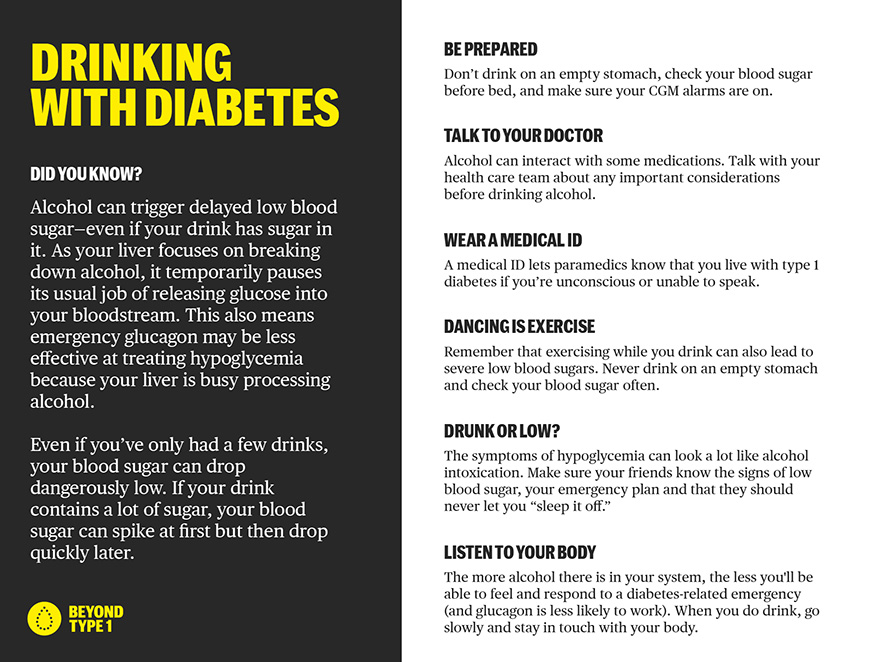
Alcohol can be tricky for people with diabetes (PWD) to navigate because it affects how your liver controls your blood sugar. This is especially important if you’re using insulin or other blood-sugar-lowering diabetes medications. Knowing this helps you stay safe and take care of your health.
Here’s the science behind what happens to your liver when you mix alcohol and diabetes:
- Your liver stops making glucose when you drink alcohol: Normally, your liver stores extra sugar from the food you eat as glycogen. Each day, your liver plays an important role in keeping your blood sugar level steady by turning this stored glycogen back into glucose (sugar).
- Your liver releases this stored glucose every day and night to provide your brain and body with the fuel it needs to function: The same stored glucose contributes to high blood sugar levels in the morning during the “dawn phenomenon,” too. And it’s part of why we need background/basal (long-acting) insulin throughout the day.
- When you drink alcohol, your liver treats it like a harmful substance that needs to be removed from your body: Think of your liver as a hard worker that has to focus on getting rid of this “toxic poison.”
- The more alcohol you consume, the longer it takes for your liver to do its job: This means that if you drink a lot, it can stay in your system for a longer time, which can affect how you feel and function. It’s important to understand this process because it shows how your body responds to what you consume.
- Taking care of your liver by drinking responsibly and in moderation is a smart and empowering choice: When your liver is focused on processing and eliminating the alcohol you drink, it stops its other job of releasing that steady drip of stored glucose. That’s when low blood sugar can happen.
- Your stomach digests food at a slower rate: Alcohol also slows down the digestion of the food you just ate. This means that the insulin you may have taken for that meal while you were drinking is being digested more slowly than usual. Insulin can act on your blood sugar before the food breaks down into glucose, increasing your risk of going low.
The lowdown on alcohol and hypos
Hypoglycemia (low blood sugar) happens when your blood sugar drops below 70 mg/dL (3.9 mmol/L). Severe low blood sugars start when your blood sugar drops to 55 mg/dL (3.1 mmol/L) or lower.
When you drink alcohol, your risk of low blood sugar goes up because your liver temporarily stops releasing stored glucose and your food is digested more slowly. This makes drinking alcohol while managing diabetes extra risky.
If you drink alcohol until late at night, you might experience delayed low blood sugar throughout the night and into the morning. In fact, alcohol-induced hypoglycemia can occur up to 12 hours after drinking.
Another danger of drinking with diabetes is that it may prevent you from hearing your continuous glucose monitor (CGM) alarms. When intoxicated, you might not notice the alarms or feel the symptoms of low blood sugar. This can lead to sleeping through a low blood sugar event, increasing the risk of severe hypoglycemia, seizures or even death.
Alcohol and the risk of undetected low blood sugar
The signs of low blood sugar can look and feel a lot like being drunk:
- Drowsiness
- Unsteady movements
- Slurred speech
- Feeling weak or tired
That’s how low blood sugars can easily fly under the radar when drinking. A severe hypo can lead to:
- Mental confusion
- Unconsciousness
- Seizures
- Coma
- Premature death
Alcohol can impair your ability to treat low blood sugar promptly. This is why your friends and family need to understand the risks of drinking alcohol with diabetes and the signs of low blood sugar.
- You should teach your friends: If you are showing signs of hypoglycemia, they should help you check your blood sugar with your blood glucose meter (BGM). And to call 911 if they are concerned about your condition or feel they are unable to help you. It’s always better to be safe than sorry.
How effective is emergency glucagon when you’re drinking alcohol?
Remember that alcohol can interfere with your liver’s ability to release glycogen, which is your body’s way of raising blood sugar quickly. If you’ve had a lot of alcohol and your blood sugar drops very low, your emergency glucagon shot might not work as well because it depends on your liver to do its job.
Glucagon is a hormone that tells your liver to release stored glycogen to help raise your blood sugar. But if your liver is busy breaking down alcohol, it might not respond normally to the glucagon.
This is an important reason why PWD need to be careful about how much alcohol they drink. Being aware and prepared can help you stay safe and in control.
Alcohol and the dangers of high blood sugar (hyperglycemia)
Since sugar and other carbs often make alcohol taste better—like in margarita mix, rum with Coke or sweet chasers—these quick-digesting carbs quickly turn into glucose and raise your blood sugar. In this guide, high blood sugar is defined as levels over 180 mg/dL (9.9 mmol/L).
Whether you have type 1 or type 2 diabetes, it’s important to count your carbs and monitor your blood sugar while drinking. Remember, pure spirits like hard liquor contain zero carbs and won’t raise your blood sugar, but they can increase the risk of low blood sugar hours after drinking.
Check what’s in your mixers—juice, soda or sweetened liquors. Pay attention to the details. Sugary mixers often cause blood sugar to spike right after drinking and can drop sharply hours later when you’re likely sleeping.
You need some insulin to cover those carbs, but your doctor might suggest lowering your usual insulin-to-carb ratio to avoid low blood sugar overnight.
Vomiting while drinking alcohol
If you start vomiting after drinking too much alcohol, it’s your body’s way of trying to handle the alcohol overdose. As someone with diabetes, especially if you use insulin, it’s crucial to check your blood sugar frequently during the hours after vomiting. You should also check for ketones.
- What are ketones? Ketones are chemicals produced when your body starts burning fat for energy. If you have diabetes and don’t have enough insulin, glucose cannot enter your cells and stays in your blood. Because your cells can’t use the glucose, they turn to burning fat instead. This process produces ketones, which can build up in your blood and spill into your urine. Being aware of ketones can help you manage them and prevent serious diabetes complications.
- Why is vomiting so dangerous for PWD who’ve been drinking? Vomiting can cause your blood sugar to drop—especially if you vomit food that you’ve already taken insulin for—or it can lead to diabetic ketoacidosis (DKA), even if your blood sugar is normal. Vomiting also causes dehydration, which can also lead to DKA.
- Pro tip—never drink alone: Make sure your friends know not just to let you “sleep it off” if you’ve been vomiting and passed out. It’s essential to get proper help to stay safe.
Alcohol and diabetes is a tricky cocktail
People with and without diabetes experience side effects from drinking alcohol, but, as with most things in life with diabetes, these side effects are considerably more dangerous.
If you drink alcohol while managing your diabetes, you may experience any of the following symptoms:
- Decreased awareness
- Lack of coordination
- Impaired judgment
- Behavioral changes
- Slurred speech
- Fatigue
- Malnutrition
Prolonged or chronic alcohol use risks for PWD include:
- Liver, heart and pancreas damage
- Shrinking of the frontal lobe
- Heightened risk for cancer
There are increased risks of damage to the body if you have any type of diabetes, including:
- Neuropathy: worsened nerve problems
- Increased triglycerides: fatty acids that put you at risk for stroke
- Increased blood pressure
- Retinopathy or damage to the eyes
- Liver damage or cirrhosis
If you’re having frequent trouble managing your blood sugar, you should consider whether it’s safe for you to drink alcohol. While some PWD can do so safely, others avoid it. It’s a matter of which set of challenges you’d prefer to deal with! Everyone is free to make their own choice alongside their doctor.
Your drinking and diabetes checklist
Now that you’re aware of the ins and outs of drinking alcohol while managing diabetes, here’s a simple checklist you can use to get started:
- Talk to your healthcare provider: Ask how you can drink safely. Talk about any medications you are on, and if you are taking insulin, discuss how you should adjust your dosages while drinking; they may want to lower your basal insulin.
- Talk to the people drinking with you about your diabetes: Don’t drink alone! Carry diabetes identification when you go out drinking, and make sure you have friends who know about the risks of drinking with diabetes. Emphasize the fact that a hypo might look like you are drunk. Share the signs of low blood sugar with them before you go out.
- Don’t drink alcohol on an empty stomach: Eat something with slow-acting carbs before you go out drinking alcohol. This means a meal that contains some carbohydrates and fat or protein. This can help prevent an alcohol-induced hypo, and it will also help your body process the alcohol more effectively.
- Know your alcohol: Keep track of how much you are drinking, the alcohol content, the sugar/carb content and pace yourself.
- Check your blood sugar often: Before you drink, while you are drinking and in the hours after you drink. Do not drink if your blood sugar is low. Check your blood sugar before you go to bed and as soon as you wake up. As we’ve described throughout this guide, alcohol can lead to unexpected fluctuations in your blood sugar. Check, check, check!
- Go out prepared: Bring your CGM, BGM, glucose tabs, a snack, etc. Remember—glucagon might not help an alcohol-induced hypo.
Enjoy alcohol responsibly with diabetes
You’re not in this alone! Sure, alcohol is another tricky thing to figure out while managing diabetes, but it’s not impossible. So long as you drink with friends and carry supplies to help you drink safely, you should be able to enjoy it like everyone else.
Need help understanding the ins and outs of life with diabetes? Download our Beyond Diagnosis beginner guides for living with type 1 or type 2 diabetes here.



Author
Amrita Misha
Beyond Type 1 is the largest diabetes org online, funding advocacy, education and cure research. Find industry news, inspirational stories and practical help. Join the 1M+ strong community and discover what it means to #LiveBeyond a diabetes diagnosis.
Related Resources

For people living with type 1 diabetes (T1D), enjoying flatbreads from non-Western cultures can come...
Read more

Disclaimer: Beyond Type 1 does not encourage or condone illegal activity, including underage drinking or...
Read more

Autoimmune arthritis is a broad term for arthritis caused by an autoimmune attack in the...
Read more