How To Count Carbs In Naan, Tortilla, Injera + Other Global Flatbreads
Written by: Beyond Type 1 Editorial Team
10 minute read
September 23, 2026
For people living with type 1 diabetes (T1D), enjoying flatbreads from non-Western cultures can come with an unanticipated blood sugar spike from incorrect carb counting. That’s because most carb-counting resources default to white bread, pasta and rice. But what if your culture’s everyday staple is roti, injera or lavash? What if you’re touring Southeast Asia and a local offers you some freshly-made roti?
In this article, we’ll take some of the guesswork out of carb-counting some of the most popular flatbreads from around the world so you can enjoy your next meal out.
What is flatbread?
Flatbread is basically any type of flattened bread made from flour, water, and salt. Sounds simple right? Depending on the type of flatbread, this global food staple often includes additional ingredients like yeast, fat, ghee or more. It can be shaped by hand, rolled to paper-thin or thick like pizza dough. With so many variables, it’s no wonder that carb counting for flatbreads can get tricky for people with T1D. That’s why it’s important to treat the suggested carb counts in this article as a starting point, not a hard rule.
Why do flatbread carb counts vary so much?
There are many variables that affect flatbread carb content. This includes:
- Size
- Type of grain it’s made from
- Fat or dairy content
- Cooking method
In addition to those factors, not all carbohydrates affect blood sugar the same way. Research shows that factors like fiber content and fermentation can actually slow down how fast sugar enters your bloodstream. This means that two flatbreads with similar carb counts can affect your blood sugar very differently.
How to carb count for flatbread
While there are many varieties of flatbread, you’ll use the same basic principles of carb counting no matter which flatbread you choose.
- Start by measuring your flatbread portion.
- Read the label, if there is one. Focus on the total carbohydrates listed on the label. That number includes sugars, starches and fiber that all affect your intake.
- Do a quick ingredients check. If you’re eating a flatbread you’ve never had before, do a quick search on your phone to see what it’s made of.
You can also bookmark this page or screenshot the list of flatbreads below to make it easier to estimate your carb count.
Carb counts for flatbreads from around the world
Below are popular flatbreads from around the world including:
- What they’re made of
- Approximate carb count for serving size
- Food pairing ideas to help with blood sugar management
Roti (South Asia)
Roti (also called chapati in many regions) traces its roots to the ancient Indus Valley Civilization, one of the world’s earliest urban civilizations. Today, this simple unleavened bread remains a cornerstone of meals across South Asia, East Africa, the Caribbean and many other parts of the world.
Made with: Whole wheat atta flour, water and sometimes salt. Traditionally cooked on a hot griddle without yeast.
Approximate carbs: 18–20 g per medium (40g) roti
Try pairing with:
- Scrambled eggs or an omelet
- Grilled chicken and cucumber slices
- Chicken and steamed vegetables
Feeling bold in the kitchen? Make your own roti.
Naan (South Asia/Middle East)
The earliest written record of naan dates back to the 1300s, when the Indo-Persian poet Amir Khusrau described it being served to nobles in the Delhi Sultanate. What was once a royal luxury has since become a favorite accompaniment to meals across the globe.
Made with: Refined wheat flour, water, yeast, yogurt and salt. Traditional naan is baked in a hot clay tandoor oven and is often brushed with butter or ghee after cooking.
Approximate carbs: 35–40g per medium (90–100g) naan
Expert tip: Garlic naan, butter naan, cheese naan and mini naan can vary significantly in carbohydrate content and serving size. Check the nutrition label whenever possible.
Try pairing with:
- Tandoori chicken and cucumber raita
- Grilled shrimp and sautéed spinach
- Saag paneer, cucumber and tomato salad
Or better yet, try making your own naan with this recipe.
Pita (Middle East)
Believed to have originated in the Middle East’s Fertile Crescent where some of the world’s earliest civilizations flourished. Pita has been feeding people for thousands of years!
Made with: Wheat flour (white or whole wheat), water, yeast, salt and sometimes a little olive oil. Pita is baked at a very high temperature, creating its characteristic pocket.
Approximate carbs: 30–35 g per medium (60–65 g) whole wheat pita
Expert tip: Carb counts vary depending on the size and whether the pita is made with white or whole wheat flour. Mini pitas and thin-style pitas contain less carbohydrate.
Try pairing with:
- Grilled chicken, hummus and cucumber and tomato salad
- Falafel and tabbouleh
- Grilled lamb or beef kebabs and roasted vegetables
If you’ve mastered other flatbreads, why not try this pita recipe?
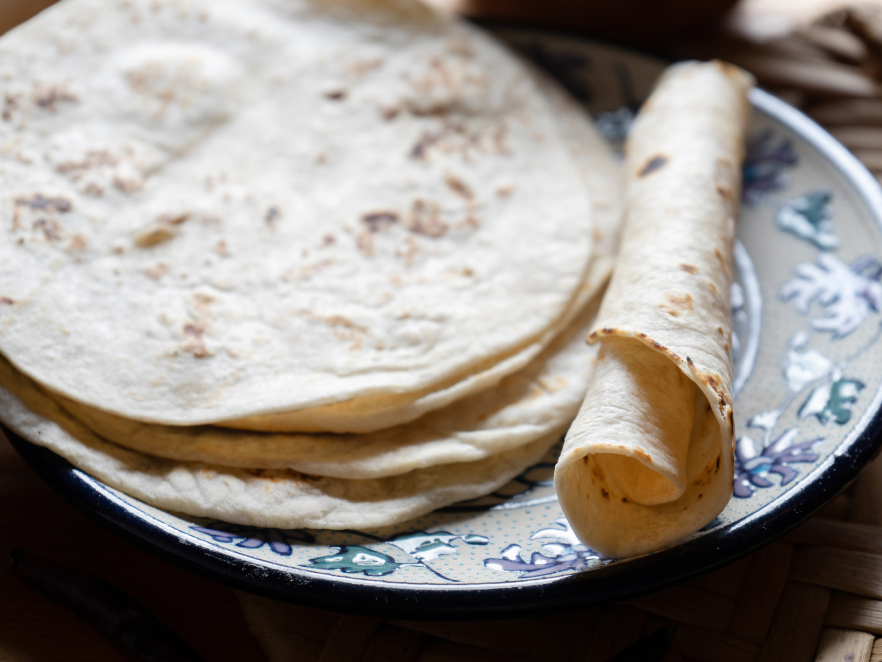
Tortilla (Mexico/Central America)
Tortillas have been a staple across Mexico and Central America for thousands of years. Corn tortillas originated in ancient Mesoamerica, while flour tortillas developed later after wheat was introduced to the region.
Corn tortillas
Made with: Nixtamalized corn, water and salt
Approximate carbs: 10–12 g per 6-inch tortilla
Try pairing with:
- Grilled fish and cabbage slaw
- Black beans, avocado and pico de gallo
There’s nothing like a fresh, homemade tortilla. This corn tortilla recipe uses only three ingredients and is great for beginners.
Flour tortillas
Made with: Wheat flour, water, fat, salt and sometimes baking powder
Approximate carbs: 22–26 g per 8-inch tortilla
Expert tip: Burrito-size tortillas may contain 40g of carbs or more, so check the nutrition label when possible.
Try pairing with:
- Chicken, sautéed peppers and onions
- Eggs, spinach and salsa
Making your own tortillas can be a fun group or date night activity. Try this simple recipe and you may never go back to store-bought.
Injera (Ethiopia/Eritrea)
Injera is a tangy, spongy flatbread central to Ethiopian and Eritrean cuisine. Traditionally shared from a communal platter, it serves as the bread, plate and utensil for scooping up stews and vegetables.
Made with: Teff flour and water, fermented for several days to develop its signature sour flavor and airy texture. Some recipes blend teff with other grains.
Approximate carbs: 12–15 g per 68 g serving
Expert tip: Injera varies considerably in size and may contain wheat, barley, sorghum or other flours. Check the recipe or restaurant’s serving size if you’re dining out.
Try pairing with:
- Misir wot (spiced lentils) + gomen (collard greens)
- Doro wat (chicken stew) + cabbage and carrots
Injera bread is a delicious and fun flatbread to eat. Try making your own with this recipe.
Lavash (Armenia/Middle East)
Lavash has been a staple of Armenian and Middle Eastern cuisine for centuries and is traditionally baked in a clay oven called a tonir. It can be enjoyed soft for wraps or baked until crisp for crackers.
Made with: Wheat flour, water, salt and sometimes yeast. Traditional lavash is rolled very thin before baking.
Approximate carbs: 18–22 g per half sheet (about 45 g) soft lavash
Expert tip: Thin lavash crackers and wraps vary widely in size and carbohydrate content, so check the label when possible.
Try pairing with:
- Grilled chicken, cucumber, tomato, and hummus
- Turkey, spinach and roasted red peppers
Short on time? This lavash recipe is ready in under 10 minutes!
Socca (France)
Socca is a thin, savory chickpea flatbread associated with France and neighboring Mediterranean regions, where similar versions are known as farinata.
Made with: Chickpea flour, water, olive oil and salt.
Approximate carbs: 11–13 g per ⅛ of a 10-inch socca
Expert tip: Serving size matters: socca may be cut into wedges, served as a large pancake or topped with additional carbohydrate-containing ingredients.
Try pairing with:
- Poached eggs,roasted tomatoes and fresh basil
- Grilled chicken and Mediterranean vegetable salad
Socca is a delicious and versatile flatbread. Get creative! Here’s a recipe to make it at home.
Matzo (Jewish tradition)
Matzo is an unleavened flatbread central to the Jewish holiday of Passover, symbolizing the bread the Israelites carried when leaving Egypt without time for the dough to rise.
Made with: Traditionally wheat flour and water, mixed and baked quickly without yeast or another leavening agent.
Approximate carbs: 23–24 g per standard sheet
Expert tip: Carbohydrate content varies by brand and recipe, especially for gluten-free and grain-free versions.
Try pairing with:
- Eggs, smoked salmon and cucumber
- Hummus and roasted vegetables
For more control on the carb content, you can make this grain-free Matzo recipe that uses protein-friendly swaps like almond flour.
How do you know which flatbreads work best for you?
Everyone deserves diabetes guidance that starts with the food they actually eat, not a math problem to solve at the table. Once you know the basic ingredients and typical portion size for a certain kind of flatbread, you have a good starting point. From there, you can adjust based on how your blood sugar actually responds.
Diabetes management should work with the foods you already love, not against them. For more support building a routine that fits your life, check out the Beyond Diagnosis Community Guide.



Author
Beyond Type 1 Editorial Team
Beyond Type 1 is the largest diabetes org online, funding advocacy, education and cure research. Find industry news, inspirational stories and practical help. Join the 1M+ strong community and discover what it means to #LiveBeyond a diabetes diagnosis.
Related Resources

Almost every college student catches a cold, the flu or a stomach bug at some...
Read more

Being a teacher means caring for 20 to 30 kids every day. (You deserve a...
Read more

Whether you're a new college student, about to get a new roommate or even an...
Read more